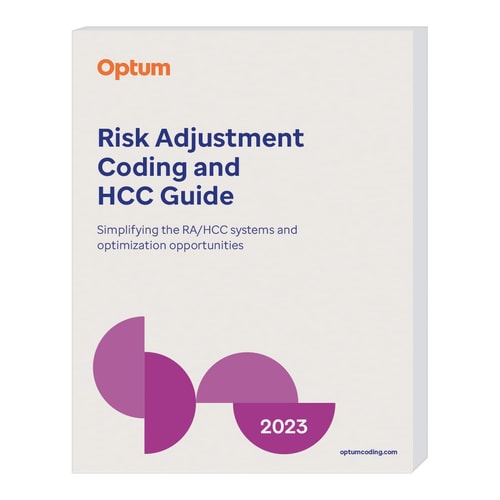
2023 Risk Adjustment Coding and HCC Guide
0
0
As an Amazon Associate and affiliate partner, Menrva Books earns from qualifying purchases. Learn more
Author Description
The Risk Adjustment Coding and HCC Guide brings together hard-to-find information about risk adjustment (RA) coding and hierarchical condition categories (HCCs) in a new comprehensive resource that explains this complex reimbursement methodology. Now your organization will have a guide that provides both the “big picture” and the fine detail needed to document, code, and report essential information so that accurate risk levels are assigned, and appropriate reimbursement received. Originally developed for use by Medicare Advantage (MA) plans, HCCs are now used in a variety of value-based reimbursement (VBR) programs. Our guide helps you navigate the shift from a fee-for-service environment to VBR and provides the tools necessary to ensure risk levels and resources are aligned. Key Features and Benefits: NEW - Optum Edge — RxHCC table. The addition of Medicare‘s RxHCC risk adjustment table that uses data derived from prescription drug usage into hierarchical condition categories for Medicare Part D and Medicare Advantage prescription drug plans. NEW - User friendly format. Our new updated format provides the same great information in an easier to read format. Optum Edge - Calculate RAF scores. Use the HCC tables to identify conditions that impact health status and cost of care. Calculate RAF scores for your patients to quantify risk. Optum Edge - Understand risk adjustment coding and HCCs. Three types of HCCs covered under Medicare, CMS-HCC, Rx-HCC, and ESRD/PACE-HCC are explained. HSS-HCCs used for commercial plans and VBR programs are also explored. Optum Edge - Learn which demographic factors and conditions impact risk. Discover the role chronic conditions play in overall risk adjustment, how the risk adjustment factor (RAF) score is calculated, and how the cumulative RAF score for covered beneficiaries drives payments to health plans. Optum Edge - Understand the provider’s role. Documentation and coding are the basis for delineating health status and calc
Menrva's Summary
THE THESIS
The 2023 Risk Adjustment Coding and HCC Guide aims to demystify the complex reimbursement methodologies of risk adjustment (RA) coding and hierarchical condition categories (HCCs). This comprehensive resource is designed to provide organizations with the detailed information necessary to accurately document, code, and report patient conditions, thereby ensuring correct risk level assignment and appropriate reimbursement. It addresses the critical shift from traditional fee-for-service models to value-based reimbursement (VBR) programs, which increasingly utilize HCCs, originally developed for Medicare Advantage plans. The guide equips users with tools to align risk levels and resources effectively within this evolving healthcare landscape.
THE SCOPE MAP
- NEW
- Optum Edge — RxHCC table, incorporating prescription drug usage data into HCCs for Medicare Part D and Medicare Advantage prescription drug plans.
- NEW
- User-friendly format for easier readability of essential information.
- Optum Edge
- Calculate RAF scores using HCC tables to identify conditions impacting health status and cost of care.
- Optum Edge
- Understand risk adjustment coding and HCCs, covering CMS-HCC, Rx-HCC, and ESRD/PACE-HCC, as well as HSS-HCCs for commercial plans and VBR programs.
- Optum Edge
- Learn which demographic factors and conditions impact risk, including the role of chronic conditions and how RAF scores drive payments.
- Optum Edge
- Understand the provider’s role in documentation and coding as the basis for delineating health status.
THE AUTHORITY PERSPECTIVE
This guide is presented as a comprehensive resource for navigating the complexities of risk adjustment coding and HCCs, particularly within the context of shifting healthcare reimbursement models towards value-based care. It highlights new features such as the RxHCC table and an updated user-friendly format, alongside established tools for calculating RAF scores and understanding the impact of various conditions and demographic factors on risk. The content is structured to assist organizations in accurately assigning risk levels and securing appropriate reimbursement in programs like Medicare Advantage and other value-based initiatives.
Page Count:
0
Publication Date:
2023-01-31
Publisher:
Optum
ISBN-10:
1622547829
ISBN-13:
9781622547821
Health
Business
Non-Fiction
Reference
Community Tags
Similar Books