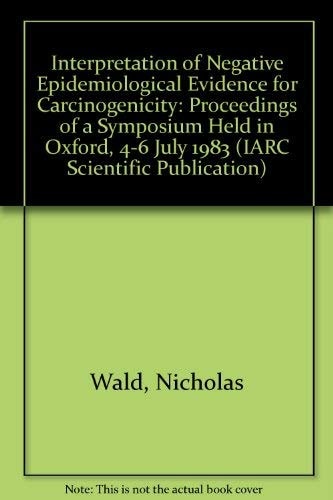
Interpretation of Negative Epidemiological Evidence for Carcinogenicity
0
0
As an Amazon Associate and affiliate partner, Menrva Books earns from qualifying purchases. Learn more
Author Description
This volume consists of the proceedings of a symposium held at Oxford concerning the weight to be given to negative epidemiolgoical evidence in identifying agents that are potentially carcinogenic to humans. A number of highly pertinent examples are studied, including carcinogens that have been identified experimentally but either have important roles in society (such as oral contraceptives) or are too expensive to remove from the environment (such as nitrate in drinking-water). The relative weight given to experimental and epidemiologic results is fully discussed, especially in terms of social and economic consequences. This is a trail-blazing volume of great importance to anyone interested in assessment of human risk.
Menrva's Summary
THE THESIS
This volume investigates the methodological and ethical challenges of interpreting negative epidemiological evidence when assessing the carcinogenic potential of environmental and social agents. Nicholas J. Wald compiles the proceedings of an Oxford symposium to address how researchers should weigh experimental data against epidemiological findings. The text explores the tension between scientific evidence and the practical, economic, and social implications of regulating substances that are experimentally linked to cancer but lack clear epidemiological confirmation.
THE SCOPE MAP
What You Will Find
- Analysis of the weight assigned to negative epidemiological evidence in risk assessment.
- Case studies of agents with experimental carcinogenicity, including oral contraceptives and nitrates in drinking water.
- Discussion on the socio-economic consequences of environmental regulation and risk management.
- Methodological frameworks for reconciling conflicting experimental and human observational data.
THE AUTHORITY PERSPECTIVE
Experts recognize this publication as a foundational text for understanding the complexities of cancer risk assessment and the limitations of epidemiological studies. Readers frequently note the academic density of the prose, which serves as a critical resource for professionals in public health and environmental policy.
Page Count:
200
Publication Date:
1986-01-16
Publisher:
Oxford University Press
ISBN-10:
0197230652
ISBN-13:
9780197230657
Science
Epidemiology
Medicine
Carcinogens
Public Health
Oncology
Environmental Health
Community Tags
Similar Books