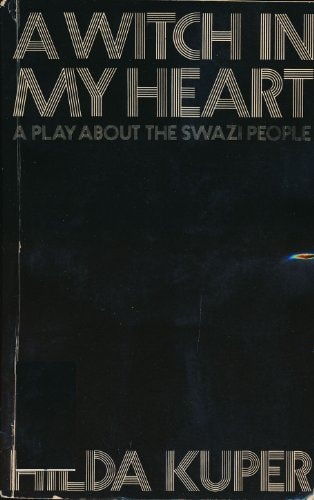
A Witch in My Heart: A Play Set in Swaziland in the 1930s
0
0
As an Amazon Associate and affiliate partner, Menrva Books earns from qualifying purchases. Learn more
Author Description
This play, set in Swaziland in the 1930s, dramatizes the deep emotions and the social conflicts involved in accusations of witchcraft.
Menrva's Summary
THE PULSE
A woman faces a harrowing accusation of witchcraft that threatens to dismantle her standing within her community and her own household. The protagonist must navigate the rigid social hierarchies and traditional belief systems of 1930s Swaziland to prove her innocence against mounting suspicion. Her objective is to preserve her reputation and family integrity while contending with neighbors and kin who view her presence as a source of misfortune. The narrative unfolds through dialogue-heavy scenes that highlight the tension between individual agency and collective cultural expectations.
INSIDE THE PAGES
- Exploration of traditional Swazi social structures and kinship dynamics
- Examination of the psychological impact of witchcraft accusations
- Use of dialogue to reveal character motivations and community tensions
- Focus on the conflict between personal innocence and public perception
- Depiction of 1930s rural Swaziland as a primary setting
- Analysis of gender roles within a patriarchal social framework
- Integration of cultural rituals and belief systems as narrative drivers
- Emphasis on the fragility of social status in a close-knit society
THE COLLECTIVE ECHO
Readers and critics often note the play's unique position as a dramatic work written by an anthropologist, which lends a distinct authenticity to the cultural depictions. Discussion frequently centers on how the author balances the dramatic requirements of a stage play with the sociological realities of the time period. The pacing is described as deliberate, allowing the audience to observe the slow escalation of suspicion and the resulting social fallout. Many highlight the effectiveness of the dialogue in capturing the nuances of interpersonal conflict within the community. The work is frequently cited for its ability to provide insight into the complexities of belief systems that remain misunderstood by outside observers.
Page Count:
70
Publication Date:
1970-01-01
Publisher:
Oxford U.P
ISBN-10:
0197241808
ISBN-13:
9780197241806
Politics
Drama
Social Issues
Anthropology
Historical
Plays