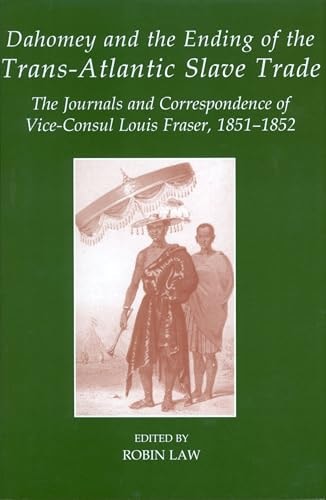
Dahomey and the Ending of the Transatlantic Slave Trade: The Journals and Correspondence of Vice-Consul Louis Fraser, 1851-1852
0
0
As an Amazon Associate and affiliate partner, Menrva Books earns from qualifying purchases. Learn more
Author Description
The Vice-Consulate in the coastal port of Ouidah, in the kingdom of Dahomey, West African (now in the modern Republic of Benin) was established in1851-2 as part of the British government's efforts to suppress the trans-Atlantic slave trade. In particular it was hoped to persuade King Gezo to accept a treaty banning exports of slaves from his dominions.Louis Fraser proved a poor choice as Vice-Consul: he was no linguist, abrasive with naval colleagues and arrogant towards the king and people of Ouidah. However, his shortcomings as a diplomat do not detract from the value of his account as a historical resource.The documents collected here comprise principally the journals of the Vice-Consul, Louis Fraser, together with letters and other reports by him, a selection of the documents referred to in his journals, and letters and reports by other British officials (especially officers of the navy's West African squadron) which refer to his activities. These documents are valuable sources, not only for the history of British policy on the slave trade, but also for the history of Dahomey, which was one of the most important indigenous states in coastal West Africa in the nineteenth century.Fraser was one of a number of British visitors to Dahomey in the mid-nineteenth century, many of whom left published accounts. Fraser's account, in contrast, was never published, and so has remained less known. Its publication now brings it more effectively within the public domain.
Menrva's Summary
THE THESIS
This volume investigates the diplomatic failures and historical observations of Vice-Consul Louis Fraser during his tenure in the Kingdom of Dahomey between 1851 and 1852. Robin Law, a distinguished historian of West Africa, curates and contextualizes these previously unpublished journals and correspondence to illuminate the complexities of British anti-slave trade policy. By presenting these primary documents, the work provides a critical lens into the political landscape of nineteenth-century Dahomey and the friction between British colonial interests and indigenous power structures.
THE SCOPE MAP
What You Will Find
- Primary source documentation including journals, official reports, and correspondence from the British Vice-Consulate in Ouidah.
- Detailed accounts of British naval operations and diplomatic negotiations with King Gezo.
- Contextual analysis of the socio-political climate in the Kingdom of Dahomey during the mid-nineteenth century.
- Insights into the logistical and interpersonal challenges faced by British officials tasked with suppressing the transatlantic slave trade.
THE AUTHORITY PERSPECTIVE
Scholars and historians regard this collection as a vital resource for understanding the nuances of British interventionism in West Africa. The text is noted for its meticulous editing and the significant historical value of the primary documents it preserves for academic study.
Page Count:
280
Publication Date:
2012-09-26
Publisher:
British Academy
ISBN-10:
0197265219
ISBN-13:
9780197265215
History
Colonial History
African history
Diplomatic History
Primary Sources
Slave Trade
Africa - History
Community Tags
Similar Books