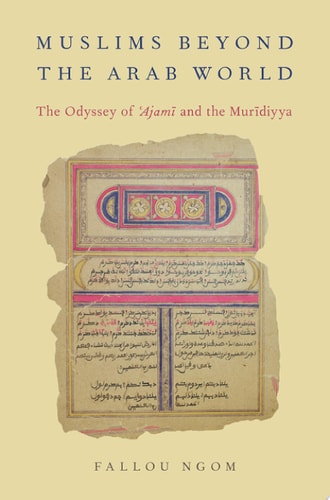
Muslims beyond the Arab World: The Odyssey of Ajami and the Muridiyya
0
0
As an Amazon Associate and affiliate partner, Menrva Books earns from qualifying purchases. Learn more
Author Description
Muslims beyond the Arab World explores the vibrant tradition of writing African languages using the modified Arabic script ('Ajami) alongside the rise of the Muridiyya Sufi order in Senegal. The book demonstrates how the development of the 'Ajami literary tradition is entwined with the flourishing of the Muridiyya into one of sub-Saharan Africa's most powerful and dynamic Sufi organizations. It offers a close reading of the rich hagiographic and didactic written, recited, and chanted 'Ajami texts of the Muridiyya, works largely unknown to scholars. The texts describe the life and Sufi odyssey of the order's founder, Shaykh Ahmadu Bamba Mbakke (1853-1927),his conflicts with local rulers and Muslim clerics and the French colonial administration, and the traditions and teachings he championed that permanently shaped the identity and behaviors of his followers.Fallou Ngom evaluates prevailing representations of the Muridiyya movement and offers alternative perspectives. He demonstrates how the Mur?ds used their written, recited, and chanted 'Ajami materials as an effective mass communication tool in conveying to the masses Bamba's poignant odyssey, doctrine, the virtues he stood for and cultivated among his followers-self-esteem, self-reliance, strong faith, work ethic, pursuit of excellence, determination, nonviolence, and optimism in the face of adversity-without the knowledge of the French colonial administration and many academics. Muslims beyond the Arab World argues that this is the source of the resilience, appeal, and expansion of Muridiyya, which has fascinated observers since its inception in 1883.
Menrva's Summary
THE THESIS
This book investigates the historical and cultural significance of the Ajami literary tradition in Senegal and its role in the expansion and resilience of the Muridiyya Sufi order. Fallou Ngom, a professor specializing in African languages and cultures, utilizes a wealth of previously unexamined Ajami texts to challenge existing academic narratives regarding the Muridiyya movement. He argues that the use of Ajami—African languages written in modified Arabic script—served as a sophisticated, clandestine communication network that allowed the followers of Shaykh Ahmadu Bamba to preserve their identity and teachings under French colonial rule.
THE SCOPE MAP
What You Will Find
- Analysis of the Ajami literary tradition in Senegal.
- Historical examination of the Muridiyya Sufi order from 1883 to the early 20th century.
- Study of hagiographic, didactic, and chanted texts associated with Shaykh Ahmadu Bamba.
- Exploration of the intersection between religious doctrine and anti-colonial resistance.
Scope Limits
- The study focuses specifically on the Muridiyya order and does not provide a comprehensive history of all Sufi movements in West Africa.
- The analysis is limited to the specific linguistic and cultural context of Senegalese Ajami rather than a global survey of Islamic literacy.
THE AUTHORITY PERSPECTIVE
Scholars in the field of African studies and Islamic history recognize this work as a significant contribution to the understanding of non-Arabic Islamic traditions. Readers frequently note the academic density of the prose, which provides a rigorous, evidence-based look at a previously under-researched subject.
Page Count:
332
Publication Date:
2016-01-01
Publisher:
Oxford University Press
ISBN-10:
0190612908
ISBN-13:
9780190612900
Religion
History
Muslims africa
English
Sociology
Islam
English & College Success
Muslims
Sufism
African history
Linguistics
Africa - History
Community Tags
Similar Books