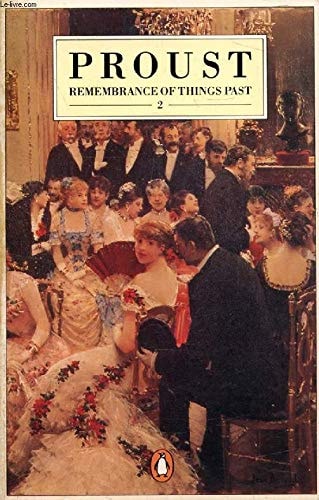
Remembrance of Things Past: The Guermantes Way
0
0
As an Amazon Associate and affiliate partner, Menrva Books earns from qualifying purchases. Learn more
Author Description
Before his death in 1922, Marcel Proust accomplished the monumental feat of recording Remembrance of Things Past, a fifteen-volume literary history, much of which was based upon his own adventures and minute observations. The Guermantes Way is an installation in this collection and recounts, among other things, his childhood in Combray and the relevance of grasping the importance of particular events and people from his past in his development as a writer. Although autobiographical, Proust employs suspense and the observation of minutiae to illustrate our own subjective existence.
Menrva's Summary
THE PULSE
The narrator attempts to reconstruct the totality of his past through the involuntary retrieval of memory triggered by sensory experience. The protagonist navigates the complex social hierarchies of the French aristocracy and the intellectual circles of the early twentieth century, seeking to reconcile his internal perception of time with the external reality of his social environment. The narrative framework is deeply introspective and non-linear, utilizing a stream-of-consciousness style that prioritizes psychological depth over traditional plot progression. The protagonist faces the inevitable decay of memory and the shifting nature of identity as he matures from a sensitive child in Combray into a dedicated writer.
INSIDE THE PAGES
- Extensive use of involuntary memory as a narrative catalyst
- Detailed examination of social stratification within the French aristocracy
- Introspective, long-form sentence structures
- Exploration of the subjective nature of time and experience
- Focus on the development of the artistic consciousness
- Precise observation of minute social interactions and gestures
- Integration of autobiographical elements with fictionalized character studies
- Philosophical inquiry into the nature of reality and perception
THE COLLECTIVE ECHO
Discussion often centers on the immense scale of the work and the author's ability to capture the nuance of human consciousness. Readers frequently highlight the patience required to navigate the dense, expansive prose that characterizes the narrative style. Critics often note the effectiveness of the author's sensory-based world-building, which transforms mundane observations into profound existential reflections. The balance of character development remains heavily weighted toward internal monologue rather than external action, which defines the unique atmosphere of the text. Many readers find the exploration of memory to be the most compelling aspect of the work, providing a framework for understanding the protagonist's growth.
Page Count:
1208
Publication Date:
1983-07-05
Publisher:
Penguin Classic
ISBN-10:
0140059520
ISBN-13:
9780140059526
classic
Autobiographical fiction
Philosophical
French literature
Modernist