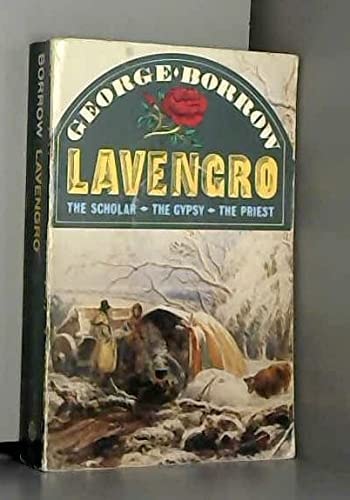
Lavengro: The Scholar, the Gypsy, the Priest
0
0
As an Amazon Associate and affiliate partner, Menrva Books earns from qualifying purchases. Learn more
Author Description
Falling somewhere between the genres of memoir and novel, Lavengro has long been considered a classic of 19th-century English literature. According to the author lav-engro is a Romany word meaning "word master". The historian G.M. Trevelyan called this "a book that breathes the spirit of that period of strong and eccentric characters".Its protagonist, whose name is never mentioned, is born the son of an officer in a militia regiment and is brought up in various barrack towns in England, Scotland and Ireland. After serving an apprenticeship to a lawyer he moves to London and becomes a Grub Street hack, an occupation which gives him ample opportunities to observe London low-life. Finally he takes to the road as a tinker. At various points through the book he associates with Romany travellers, of whom he gives memorable and generally sympathetic pen-portraits. Lavengro was followed by a sequel, The Romany Rye. Neither of the two books is self-contained. Rather, Lavengro ends abruptly with chapter 100, and carries on directly in the The Romany Rye. Thus both need to be read together, in order.
Menrva's Summary
THE PULSE
A young man navigates the shifting social landscapes of 19th-century Britain, seeking identity through his encounters with diverse subcultures and the Romany people. The unnamed protagonist moves from a transient military upbringing to the grueling life of a London writer, eventually abandoning urban society to live as a tinker. His objective is to find personal meaning and intellectual freedom, though he is constantly opposed by the rigid class structures and economic hardships of his era. The narrative is presented as a semi-autobiographical account, utilizing a picaresque framework that emphasizes observation over traditional plot progression.
INSIDE THE PAGES
- Episodic narrative structure reflecting the protagonist's transient lifestyle
- Detailed linguistic observations regarding Romany dialects
- Vivid character sketches of marginalized figures and eccentric social types
- Exploration of the Grub Street literary culture in London
- First-person perspective providing intimate access to the narrator's internal development
- Realistic depiction of 19th-century military and civilian life
- Philosophical reflections on the nature of language and identity
- Abrupt narrative conclusion designed to lead into the sequel
THE COLLECTIVE ECHO
Readers and critics often characterize this work as a unique hybrid that defies simple categorization between memoir and novel. Discussion frequently centers on the author's ability to capture the spirit of 19th-century England through his focus on eccentric characters and linguistic curiosity. While some readers find the pacing uneven due to its episodic nature, others appreciate the atmospheric depth and the sympathetic portrayal of Romany travelers. The work is widely recognized for its historical value and its contribution to the picaresque tradition in English literature.
Page Count:
582
Publication Date:
1982-08-19
Publisher:
Oxford Paperbacks
ISBN-10:
0192813579
ISBN-13:
9780192813572
Adventure
Travelogue
Contemporary
classic
Autobiographical fiction
19th Century
Community Tags
Other Editions(2)
Similar Books