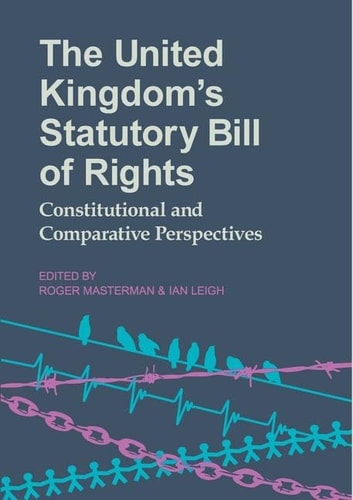
The United Kingdom's Statutory Bill of Rights: Constitutional and Comparative Perspectives
0
0
As an Amazon Associate and affiliate partner, Menrva Books earns from qualifying purchases. Learn more
Author Description
By providing enforceable remedies for breaches of Convention Rights in domestic courts, and in allowing judges to scrutinise parliamentary legislation on human rights grounds, the United Kingdom's Human Rights Act 1998 marked a sea-change in the relationships between the individual and the state, and between the courts and the political branches of government, as they had been traditionally understood. Despite the undeniable practical importance of the Human Rights Act, widespread political and popular scepticism over the nature of rights adjudication and the relationship between human rights laws and-for instance-measures designed to combat terrorism and crime, has prevented the Human Rights Act from being seen as an established and essential part of our constitutional structures. This uncertainty has not however prevented the Human Rights Act from exerting significant constitutional influence within the United Kingdom, within the framework provided by the European Convention and European Court of Human Rights, and beyond. This edited collection of essays therefore seeks to chart the lasting constitutional impact of the Human Rights Act at a point when its political future is far from assured. To that end, chapters examine the relationships between the Human Rights Act and domestic constitutional doctrine, with the Convention's enforcement bodies at Strasbourg and with statutory bills of rights in other common law jurisdictions. Further, the collection goes on to examine the permanence of changes initiated in domestic legal reasoning and process-including to judicial technique and in advocacy-before finally turning to examine how the experience of the Human Rights Act might influence the future development of a Bill of Rights for the United Kingdom.
Menrva's Summary
THE THESIS
This collection investigates the constitutional impact and long-term viability of the United Kingdom's Human Rights Act 1998 within the context of evolving domestic and international legal standards. Editors Ian Leigh and Roger Masterman compile scholarly essays to evaluate how the Act has altered the balance of power between the judiciary, the legislature, and the individual. By analyzing the intersection of domestic legal reasoning with European Convention standards, the authors assess whether the Act has achieved a permanent place in the British constitutional framework or if it remains a subject of political contention.
THE SCOPE MAP
What You Will Find
- Comparative analysis of statutory bills of rights across various common law jurisdictions.
- Examination of the relationship between domestic courts and the European Court of Human Rights.
- Assessment of shifts in judicial technique and legal advocacy resulting from the 1998 Act.
- Critical evaluation of the political future of human rights legislation in the United Kingdom.
THE AUTHORITY PERSPECTIVE
Legal scholars and practitioners view this volume as a rigorous academic examination of the intersection between human rights law and constitutional doctrine. Experts highlight the text as a foundational resource for understanding the complexities of the Human Rights Act within the British political system.
Page Count:
370
Publication Date:
2013-05-19
Publisher:
British Academy
ISBN-10:
0197265375
ISBN-13:
9780197265376
Law
Human rights
United Kingdom
Constitutional Law
Community Tags
Similar Books