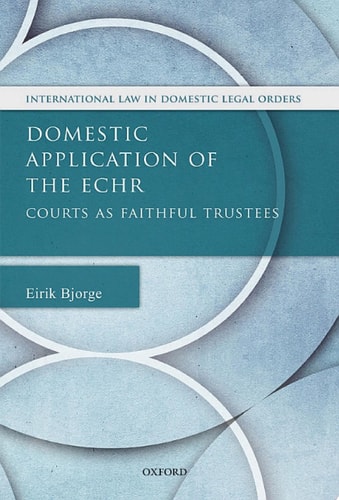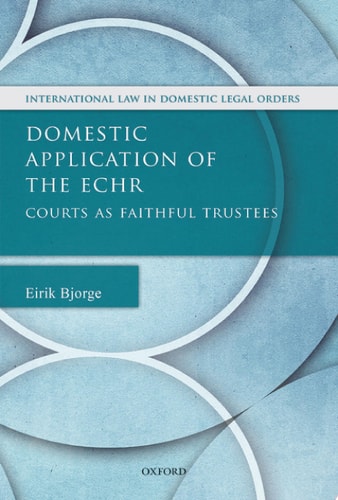
Domestic Application of the ECHR: Courts as Faithful Trustees
0
0
As an Amazon Associate and affiliate partner, Menrva Books earns from qualifying purchases. Learn more
Author Description
Domestic Courts Are Entrusted With The Application Of The European Convention On Human Rights (echr), As Faithful Trustees Of The Rights Protected In The Convention. This Book Analyses The Way In Which The Domestic Courts In The United Kingdom, France, And Germany Apply The Echr And How, Applying The Convention, They Define Their Relationship With The European Court Of Human Rights. Contrary To What Others Have Contended, The Book Argues That It Is Not True Descriptively, Nor Desirable Normatively, That The Domestic Courts Approach The Echr Based Upon Friction And Assertion Of Sovereignty Vis-à-vis The European Court. The Proper Role Played By The Domestic Courts, And The One Which They Have Taken On Them To Perform In Fact, Is To Apply The Convention In All Good Faith, Building On The Principles Of The Convention As Set Out In The Jurisprudence Of The European Court. But If Domestic Courts Are In A Position To Apply The Echr In The First Place, It Is Because The Application Of The Convention Has Been Entrusted To Them By The Other Organs Of The Municipal State; In Certain Cases Municipal Principles Of The Separation Of Powers Have An Important Bearing On Domestic Interpretation And Application Of The Convention. Domestic Application Of The Echr: Courts As Faithful Trustees Shows That, Through Their Faithful Application Of The Echr, Domestic Courts Can - And Do - Make A Positive Contribution To The Development Of The Law Of The Convention.
Menrva's Summary
THE THESIS
This book investigates the role of domestic courts as primary interpreters and implementers of the European Convention on Human Rights (ECHR) within their respective national legal systems. Eirik Bjorge, a legal scholar, examines the interaction between national judiciaries and the European Court of Human Rights. He challenges the prevailing narrative of friction and sovereignty-based resistance, arguing instead that domestic courts act as faithful trustees that apply the Convention in good faith while respecting municipal separation of powers.
THE SCOPE MAP
What You Will Find
- Comparative analysis of judicial practices in the United Kingdom, France, and Germany.
- Examination of the relationship between national constitutional principles and international human rights obligations.
- Theoretical framework regarding the 'faithful trustee' model of judicial interpretation.
Scope Limits
- The analysis does not cover every signatory state of the ECHR, focusing specifically on the three mentioned jurisdictions.
- The text does not provide a comprehensive history of the European Court of Human Rights itself, but rather focuses on its interaction with domestic legal organs.
THE AUTHORITY PERSPECTIVE
Legal scholars and practitioners frequently cite this work for its nuanced challenge to sovereignty-centric interpretations of international law. Experts highlight the text as a significant contribution to the understanding of how national courts integrate supranational human rights standards into domestic jurisprudence.
Page Count:
240
Publication Date:
2015-01-01
Publisher:
Oxford University Press
ISBN-10:
0191061328
ISBN-13:
9780191061325
Constitutional Law
Law
Human rights
International Law
Comparative Law
European Law