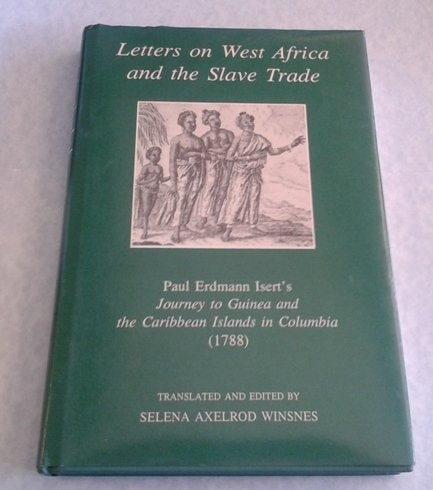
Letters on West Africa and the Slave Trade
0
0
As an Amazon Associate and affiliate partner, Menrva Books earns from qualifying purchases. Learn more
Author Description
Isert's book, in the form of twelve letters evidently written for publication, has excited interest ever since it first appeared in 1788. Though Isert's text was long ago translated into other languages, this is its first translation from the original German into English. Already a respected botanist and medical doctor, Isert became interested in ethnography on his arrival in Accra. Isert also has a special place in West African history because of his attempt to establish a plantation on the Gold Coast to counteract the trans-Atlantic slave trade. Throughout his text Isert draws a clear and lively picture of life on the Gold and Slave Coasts of Africa and the Danish and French islands in the West Indies at the end of the eighteenth century.
Menrva's Summary
THE THESIS
This collection of letters investigates the socio-economic and ethnographic realities of the Gold and Slave Coasts of Africa during the late eighteenth century. The author, Paul Erdmann Isert, was a trained botanist and medical doctor whose observations provide a unique perspective on the regional dynamics of the trans-Atlantic slave trade. By documenting his experiences and his failed attempt to establish a plantation as an alternative to the slave trade, Isert offers a critical primary source regarding colonial interactions and local life in West Africa and the West Indies.
THE SCOPE MAP
What You Will Find
- Detailed ethnographic observations of the Gold and Slave Coasts of Africa.
- Primary source documentation regarding the mechanics of the trans-Atlantic slave trade.
- First-hand accounts of life on Danish and French islands in the West Indies.
- Historical context regarding the transition from botanical research to colonial plantation management.
THE AUTHORITY PERSPECTIVE
Historians and scholars of African history frequently cite this work as a foundational primary source for understanding late eighteenth-century colonial perspectives. The text is noted for its clinical detail and its significant contribution to the study of the abolitionist movement's early precursors.
Page Count:
288
Publication Date:
1992-02-27
Publisher:
Oxford University Press
ISBN-10:
0197261051
ISBN-13:
9780197261057
Biography
Travel
History
Slavery africa
Slavery
Africa
Colonialism
Community Tags
Similar Books