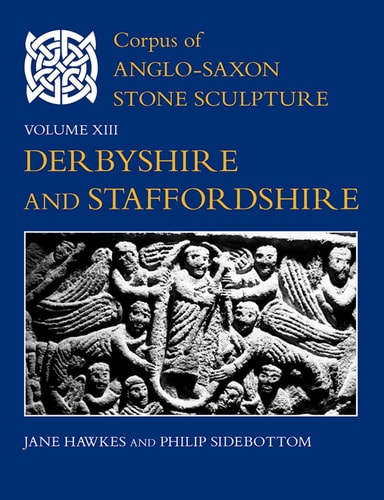
Corpus of Anglo-Saxon Stone Sculpture, Volume XIII: Derbyshire and Staffordshire
0
0
As an Amazon Associate and affiliate partner, Menrva Books earns from qualifying purchases. Learn more
Author Description
This volume in the Corpus of Anglo-Saxon Sculpture surveys the counties of Derbyshire and Staffordshire and provides an analytical catalogue of the Anglo-Saxon stone sculptures of that region. Introductory chapters set the material within historical, topographical, archaeological and art-historical contexts, as well as its scholarly framework, and there are specialist contributions concerning the geology of the monuments and the sculpture from the (originally) royal ecclesiastical site at Repton in Derbyshire. There is a full photographic record of each monument, and many of the images were taken specially for the volume.The monuments include important collections of material from Derby (St Alkmund's) and Repton, as well as individual sculptures of the highest quality such as the Lichfield Angel, cross-shafts from Bakewell and Bradbourne, the unique column standing at Wolverhampton and the sarcophagus cover from Wirksworth. Much of the material was carved at a time when Mercian art was at its zenith in the late 8th to early 10th centuries, but there is also a significant body of carvings from the later 10th and 11th centuries when the Scandinavians are known to have been active, although the region marks the fluctuating border between Scandinavian and Anglo-Saxon controlled Mercia.This volume thus represents a synthesis of resent research and a complete survey of the Anglo-Saxon and Anglo-Scandinavian sculpture of the two counties, and will provide a major contribution to the study of pre-Conquest sculpture in Britain. It shows that in the early Middle Ages Derbyshire and Staffordshire offered a vibrant milieu in which influential artistic ideas could develop and spread, not just in carved stone but also in manuscripts, metalwork and other materials, and that craftsmen, working for ecclesiastical and secular patrons, produced works of the highest quality.
Menrva's Summary
THE THESIS
This volume investigates the artistic and historical significance of Anglo-Saxon stone sculpture within the counties of Derbyshire and Staffordshire during the early Middle Ages. The authors, Jane Hawkes and Philip C. Sidebottom, utilize archaeological data, geological analysis, and art-historical frameworks to document the evolution of stone carving in Mercia. By examining monuments from the 8th to the 11th centuries, the text argues that this region served as a critical site for the development of influential artistic styles under both Anglo-Saxon and Scandinavian influence.
THE SCOPE MAP
What You Will Find
- A comprehensive analytical catalogue of stone sculptures located in Derbyshire and Staffordshire.
- Introductory chapters detailing the historical, topographical, and archaeological context of the region.
- Specialist contributions regarding the geology of the monuments and the ecclesiastical site at Repton.
- A complete photographic record of the surveyed monuments, including high-quality images of the Lichfield Angel and the Wirksworth sarcophagus cover.
THE AUTHORITY PERSPECTIVE
Experts recognize this volume as a definitive reference for the study of pre-Conquest sculpture in Britain. Scholars frequently note the academic rigor and the extensive photographic documentation that make this work a foundational resource for medievalists and archaeologists.
Page Count:
500
Publication Date:
2018-09-26
Publisher:
Oxford University Press
ISBN-10:
0197266215
ISBN-13:
9780197266212
History
England
Stone carving
Archaeology
Sculpture
Art History
Community Tags
Similar Books