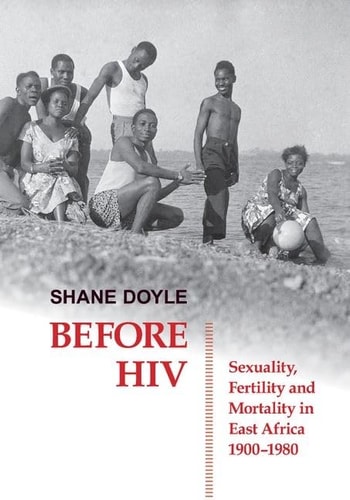
Before HIV: Sexuality, Fertility and Mortality in East Africa, 1900-1980
0
0
As an Amazon Associate and affiliate partner, Menrva Books earns from qualifying purchases. Learn more
Author Description
This book addresses two of the most important questions in modern African history: the causes of rapid population growth, and the origins of the HIV pandemic. It examines three societies on the Uganda-Tanzania border whose distinctive histories shed new light on both of these phenomena. This was the region where HIV in Africa first became a mass rural epidemic, and also where HIV infection rates first began to decline significantly.Before HIV argues that only by analysing the long history of changes in sexual behaviour and attitudes can the shape of Africa's regional epidemics be fully understood. It traces the emergence of the sexual culture which permitted HIV to spread so quickly during the late 1970s and 1980s back to the middle decades of the twentieth century, a period when new patterns of socialization and sexual networking became established. The case studies examined in this book also provide new insights into the relationship between economic and social development and trends in fertility and mortality during the twentieth century. These three societies experienced the onset of rapid population growth at different moments and for different reasons, but in each case study area the key mechanisms appear to have been a decline in child mortality, a shortening of birth intervals, and a marked decline in primary and secondary sterility.
Menrva's Summary
THE THESIS
This book investigates the historical origins of the HIV pandemic and the drivers of rapid population growth in East Africa during the twentieth century. Shane Doyle, a historian specializing in African development, utilizes archival data and regional case studies from the Uganda-Tanzania border to challenge existing narratives regarding epidemiological spread. He argues that the sexual cultures and social networking patterns that facilitated the rapid transmission of HIV in the late 1970s were established decades earlier, rooted in shifting economic and social conditions.
THE SCOPE MAP
What You Will Find
- Longitudinal analysis of sexual behavior and social networking in East Africa from 1900 to 1980.
- Comparative case studies of three distinct societies along the Uganda-Tanzania border.
- Examination of demographic shifts including child mortality rates, birth intervals, and fertility trends.
- Historical evidence linking mid-twentieth-century social development to later epidemiological outcomes.
THE AUTHORITY PERSPECTIVE
Scholars in the field of African history and public health recognize this work as a rigorous, evidence-based examination of the long-term social precursors to the HIV epidemic. Readers frequently note the academic density of the prose, which provides a necessary, nuanced counterpoint to contemporary epidemiological models.
Page Count:
450
Publication Date:
2013-03-22
Publisher:
British Academy
ISBN-10:
0197265332
ISBN-13:
9780197265338
History
Demography
MEDICAL History
Sociology
African history
Public Health
AIDS Disease
Community Tags
Similar Books