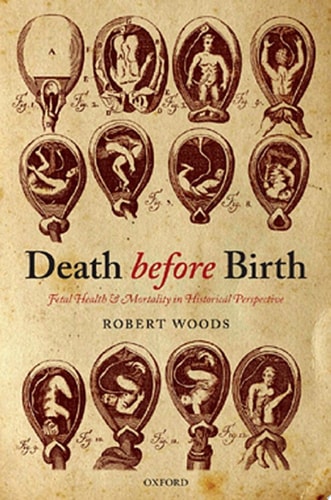
Death before Birth: Fetal Health and Mortality in Historical Perspective
0
0
As an Amazon Associate and affiliate partner, Menrva Books earns from qualifying purchases. Learn more
Author Description
Considering its importance, the history of fetal health and mortality remains a neglected area. Medical historians have tended to focus on maternal mortality and professional conflicts between midwives rather than on the unborn, while among the social scientists demographers and epidemiologists have until recently devoted most of their attention to infants and children. Death before Birth redresses this imbalance, redirecting attention to the fetus. A study of fetal health from the seventeenth century to the present day, it is the first book to offer an historical perspective on the subject and to combine both medical history and epidemiological and demographic research, using long-term and comparative perspectives, including a strong international comparative element, across both Europe and North America. The book not only provides an account of how fetal health and the risks facing the unborn (miscarriages, abortions, stillbirths etc) have changed, it also offers an interpretation of the causes, one that focuses on the role of obstetrics and the epidemiology of maternal infections. Along the way, it pays detailed attention to a host of related themes, such as varying cultural practices in the recognition of stillbirths; the age pattern of mortality risk between conception and live birth; comparative trends in late-fetal mortality and their causes; fetal mortality and obstetric care during the eighteenth, nineteenth, and twentieth centuries; and the contrasting approaches of the pathologists and 'social epidemiologists' to the causes of fetal death. The book concludes with a study of the 'fetus as patient', focusing on issues surrounding the legalization of abortion in many Western countries and the public health challenges of persistently high mortality in less developed countries.
Menrva's Summary
THE THESIS
This work investigates the historical evolution of fetal health and mortality, addressing a significant gap in medical and demographic scholarship. Robert Woods, a scholar in historical demography, synthesizes medical history with epidemiological data to analyze how risks to the unborn have shifted from the seventeenth century to the present. By examining the interplay between obstetric practices and maternal infection rates, the author provides a framework for understanding the changing nature of fetal mortality across Europe and North America.
THE SCOPE MAP
What You Will Find
- Longitudinal analysis of fetal mortality trends from the 1600s to the modern era.
- Comparative study of obstetric care and cultural practices regarding stillbirths.
- Integration of demographic research with clinical pathology and social epidemiology.
Scope Limits
- The analysis focuses primarily on Western contexts, specifically Europe and North America.
- The text does not provide an exhaustive clinical manual on modern fetal medicine.
THE AUTHORITY PERSPECTIVE
Experts recognize this text as a foundational contribution to the history of medicine, specifically for its interdisciplinary approach to a previously overlooked demographic. Readers frequently note the academic density of the prose, which serves as a rigorous resource for historians and public health researchers alike.
Page Count:
336
Publication Date:
2009-01-01
Publisher:
OUP Oxford
ISBN-10:
0191609226
ISBN-13:
9780191609220
History
Midwifery
Demography
Infants mortality
Epidemiology
Obstetrics history
Allied Health
Public Health
Sociology
Medical
MEDICAL History
Fetal Death
Community Tags
Similar Books