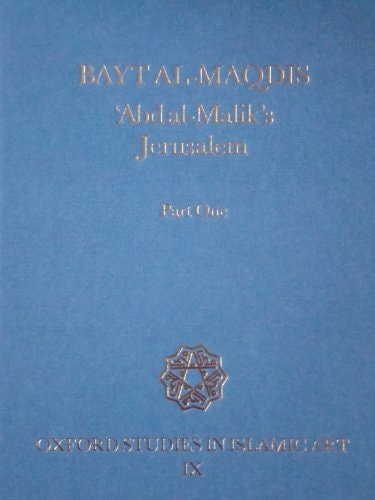
Bayt al-Maqdis, Part 1: 'Abd al-Malik's Jerusalem
0
0
As an Amazon Associate and affiliate partner, Menrva Books earns from qualifying purchases. Learn more
Author Description
At the end of the seventh century A.D., the Muslims rebuilt the former Temple Mount and created one of the most potent religious sites in the world. Its most famous building, the Dome of the Rock, is the earliest surviving Muslim religious structure and one of the glories of Islamic architecture. The articles in this volume look at different aspects of the architecture, and the intentions of the builders in establishing this complex.
Menrva's Summary
THE THESIS
This volume investigates the architectural and ideological motivations behind the construction of the Dome of the Rock and the transformation of the Temple Mount in late seventh-century Jerusalem. Jeremy Johns and Julian Raby, both distinguished scholars in the field of Islamic art and history, curate a collection of essays that analyze the site's structural evolution. By synthesizing archaeological evidence with historical records, the contributors examine how the Umayyad caliphate established a distinct religious identity through monumental building projects. The work serves as a critical examination of the political and theological landscape that defined early Islamic urban planning.
THE SCOPE MAP
What You Will Find
- Detailed architectural analysis of the Dome of the Rock and its surrounding complex.
- Historical context regarding the Umayyad caliphate's influence on Jerusalem.
- Scholarly examination of the symbolic intentions behind early Islamic religious structures.
- Comparative studies of seventh-century building techniques and artistic motifs.
THE AUTHORITY PERSPECTIVE
Experts recognize this volume as a foundational text for understanding the origins of Islamic monumental architecture. Scholars frequently cite the collection for its rigorous academic methodology and its precise focus on the historical development of the Temple Mount site.
Page Count:
176
Publication Date:
1993-01-01
Publisher:
Oxford University Press
ISBN-10:
019728017X
ISBN-13:
9780197280171
Architecture
History
Archaeology
Islamic Art
Community Tags
Similar Books