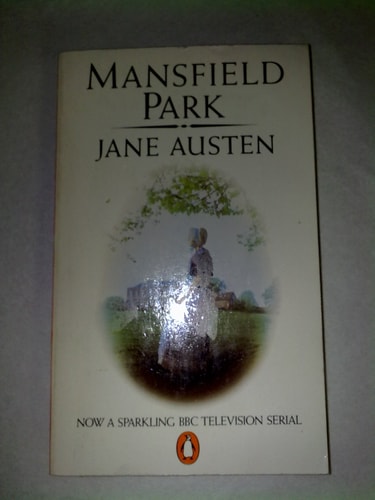
Mansfield Park
0
0
As an Amazon Associate and affiliate partner, Menrva Books earns from qualifying purchases. Learn more
Author Description
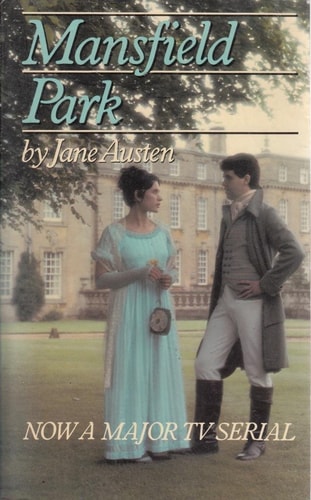
464pages. poche. Broché. Though Jane Austen was writing at a time when Gothic potboilers such as Ann Ward Radcliffe's The Mysteries of Udolpho and Horace Walpole's The Castle of Otranto were all the rage, she never got carried away by romance in her own novels. In Austen's ordered world, the passions that ruled Gothic fiction would be horridly out of place; marriage was, first and foremost, a contract, the bedrock of polite society. Certain rules applied to who was eligible and who was not, how one courted and married and what one expected afterwards. To flout these rules was to tear at the basic fabric of society, and the consequences could be terrible. Each of the six novels she completed in her lifetime are, in effect, comic cautionary tales that end happily for those characters who play by the rules and badly for those who don't. In Mansfield Park, for example, Austen gives us Fanny Price, a poor young woman who has grown up in her wealthy relatives' household without ever being accepted as an equal. The only one who has truly been kind to Fanny is Edmund Bertram, the younger of the family's two sons. Into this Cinderella existence comes Henry Crawford and his sister, Mary, who are visiting relatives in the neighborhood. Soon Mansfield Park is given over to all kinds of gaiety, including a daring interlude spent dabbling in theatricals. Young Edmund is smitten with Mary, and Henry Crawford woos Fanny. Yet these two charming, gifted, and attractive siblings gradually reveal themselves to be lacking in one essential Austenian principle. Without good principles to temper passion, the results can be disastrous, and indeed, Mansfield Park is rife with adultery, betrayal, social ruin, and ruptured friendships. But this is a comedy, after all, so there is also a requisite happy ending and plenty of Austen's patented gentle satire along the way. Describing the switch in Edmund's affections from Mary to Fanny, she "I purposely abstain.
Menrva's Summary
THE PULSE
Fanny Price, a quiet and principled young woman, must navigate the complex social hierarchies and moral dilemmas of her wealthy relatives' estate at Mansfield Park. Living as a poor relation in a household that views her as an inferior, Fanny relies on her internal moral compass to withstand the pressures of her environment. Her primary objective is to maintain her integrity while observing the shifting alliances and romantic entanglements of those around her. The narrative, presented in a third-person omniscient framework, focuses on the tension between individual desire and the rigid expectations of Regency-era society. Opposing her are the charismatic but morally ambiguous Crawford siblings, whose arrival disrupts the established order of the household.
INSIDE THE PAGES
- Exploration of the moral implications of theatrical performance in a domestic setting
- Detailed examination of the social contract of marriage in the early 19th century
- Contrast between the quiet, steadfast nature of the protagonist and the performative nature of the antagonists
- Use of irony to critique the vanity and superficiality of the landed gentry
- Focus on the psychological development of characters within a confined social space
- Analysis of the influence of upbringing and environment on personal character
- Examination of the tension between duty and personal inclination
- Satirical commentary on the values and behaviors of the British upper class
THE COLLECTIVE ECHO
Readers frequently highlight the protagonist's reserved nature as a point of significant debate, contrasting her with the more vivacious characters found in other works by the author. Discussion often centers on the novel's rigorous moral framework and whether the ending provides a satisfying resolution for all parties involved. Critics often point to the sharp, biting satire directed at the social conventions of the time, noting how the author balances this with a nuanced portrayal of domestic life. The pacing is often described as deliberate, allowing for a deep exploration of character motivations and the subtle shifts in social standing. Many readers find the work to be a complex study of integrity, noting that it offers a more somber tone than the author's other popular novels.
Page Count:
464
Publication Date:
1983-01-01
Publisher:
Penguin USA
ISBN-10:
0140059598
ISBN-13:
9780140059595
Romance
New Used & Rental Textbooks
Historical
Classics
England
Domestic fiction
Social Satire
Literature & Fiction
Young women
classic
Irish fiction
Community Tags
Other Editions(24)

Independently Published
2021
Default edition
Independently Published
2021

Independently Published
2021

Independently Published
2021

Independently Published
2021

Independently Published
2021

Independently Published
2020

Independently Published
2019
Oxford University Press España, S.A.
2016

Penguin Random House
2011

CreateSpace Independent Publishing Platform
2011
Oxford University Press España, S.A.
2010

General Books LLC
2010

General Books LLC
2009

General Books LLC
2009
Oxford University Press
2008

Kessinger Publishing, LLC
2004
Penguin USA
1983
Oxford University Press
1981

Beil Publisher, Incorporated, Frederic C.
1980

Oxford University Press
1970
Oxford University Press
1934

Huge Print Press
1900

Moonbeam Publications, Incorporated
1900





Reader Comments
Share Your Thoughts
No comments yet. Be the first to share your thoughts!