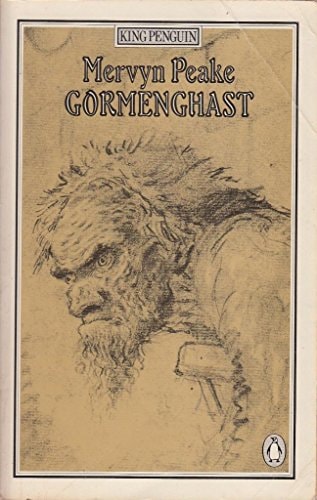
Gormenghast
0
0
As an Amazon Associate and affiliate partner, Menrva Books earns from qualifying purchases. Learn more
Author Description
Gormenghast is the second volume in Mervyn Peake's gothic fantasy trilogy, following Titus Groan. The story continues to follow the life of Titus, the heir to the Earldom of Gormenghast, as he grows up within the walls of the vast, crumbling castle. As Titus struggles against the suffocating traditions of his home, the ambitious and ruthless Steerpike continues his climb through the ranks of the castle's hierarchy, threatening to destroy everything in his path.
Menrva's Summary
THE PULSE
The sprawling, decaying castle of Gormenghast becomes the stage for a power struggle as the ambitious kitchen boy Steerpike maneuvers to dismantle the ancient, rigid traditions governing the life of Titus Groan.
Titus, the young heir to the Earldom, finds himself trapped within the suffocating rituals of his ancestral home, a labyrinthine structure that dictates every movement of its inhabitants. As Titus matures, he must contend with the machinations of Steerpike, whose rise through the castle hierarchy threatens the stability of the Groan lineage. The narrative employs a dense, descriptive prose style that emphasizes the physical decay and architectural immensity of the setting. The story unfolds through a third-person perspective that shifts between the eccentric denizens of the castle and the encroaching influence of the outside world.
INSIDE THE PAGES
- Intricate, baroque descriptions of architectural decay
- A cast of grotesque and eccentric supporting characters
- Exploration of the conflict between tradition and individual ambition
- Slow-paced, atmospheric world-building
- Focus on the psychological isolation of the nobility
- Use of surreal and dreamlike imagery
- Detailed depiction of ritualistic social structures
- Gradual escalation of political intrigue and violence
THE COLLECTIVE ECHO
Readers and critics frequently describe the work as a singular achievement in gothic fantasy, noted for its linguistic density and visual imagination. Discussion often centers on the contrast between the static, ritual-bound nature of the castle and the dynamic, ruthless ascent of the antagonist. Many highlight the lack of traditional magic, noting that the atmosphere itself functions as the primary supernatural element. The pacing is often characterized as deliberate and immersive, requiring patience from the reader to fully grasp the scale of the setting. Critics emphasize that the text serves as a meditation on the burden of heritage and the inevitable erosion of stagnant institutions.
Page Count:
511
Publication Date:
1969-01-01
Publisher:
Penguin
ISBN-10:
0140060154
ISBN-13:
9780140060157
Literary Fiction
Fantasy
classic
Literary
Surrealism
Gothic
Classics