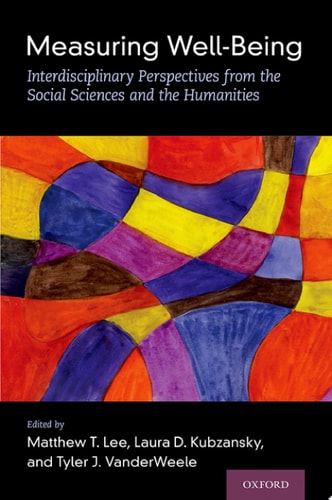
Measuring Well-Being: Interdisciplinary Perspectives from the Social Sciences and the Humanities
0
0
As an Amazon Associate and affiliate partner, Menrva Books earns from qualifying purchases. Learn more
Author Description
This edited volume focuses on both conceptual and practical challenges in measuring well-being. Leveraging insights across diverse disciplines, including psychology, economics, sociology, statistics, public health, theology, and philosophy, contributors consider the philosophical and theological traditions on happiness, well-being and the good life, as well as recent empirical research on well-being and its measurement. The chapters review what is known empirically about how different measures of well-being relate to each other and considers various arguments for and against use of specific measures of well-being in different contexts. Further, the volume includes discussion of how a synthesis of existing research helps us make sense of the proliferation of different measures and concepts within the field, while also foregrounding the insights gained by investigations and conceptual thinking occurring across diverse disciplines.
Menrva's Summary
THE THESIS
This volume investigates the conceptual and practical challenges inherent in defining and quantifying human well-being across disparate academic fields. The editors, Laura D. Kubzansky, Matthew T. Lee, and Tyler J. Vanderweele, assemble a multidisciplinary team of experts to bridge the gap between empirical data and philosophical inquiry. By integrating perspectives from psychology, economics, theology, and public health, the text provides a rigorous framework for evaluating how various metrics of happiness and the good life interact within contemporary research.
THE SCOPE MAP
What You Will Find
- Comparative analysis of well-being metrics across psychology, economics, and sociology.
- Philosophical and theological foundations of happiness and the good life.
- Empirical reviews of how different well-being measures correlate in diverse contexts.
- Methodological synthesis for navigating the proliferation of competing concepts in the field.
THE AUTHORITY PERSPECTIVE
Experts identify this volume as a critical resource for researchers seeking to synthesize quantitative data with qualitative philosophical inquiry. The text is noted for its academic density and its utility in standardizing measurement practices across the social sciences and humanities.
Page Count:
622
Publication Date:
2021-04-01
Publisher:
Oxford University Press
ISBN-10:
0197512534
ISBN-13:
9780197512531
Psychology
Economics
Philosophy
Public Health
Sociology
Social Science
Community Tags
Similar Books