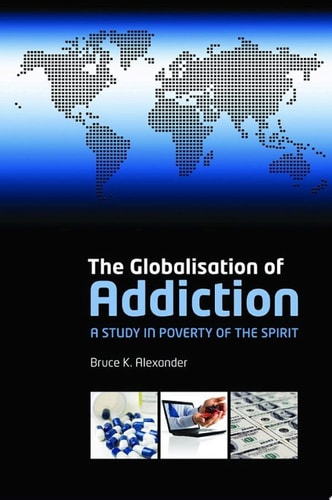
The Globalization of Addiction: A Study in Poverty of the Spirit
0
0
As an Amazon Associate and affiliate partner, Menrva Books earns from qualifying purchases. Learn more
Author Description
'The Globalization of Addiction' presents a radical rethink about the nature of addiction. Scientific medicine has failed when it comes to addiction. There are no reliable methods to cure it, prevent it, or take the pain out of it. There is no durable consensus on what addiction is, what causes it, or what should be done about it. Meanwhile, it continues to increase around the world. This book argues that the cause of this failure to control addiction is that the conventional wisdom of the 19th and 20th centuries focused too single-mindedly on the afflicted individual addict. Although addiction obviously manifests itself in individual cases, its prevalence differs dramatically between societies. For example, it can be quite rare in a society for centuries, and then become common when a tribal culture is destroyed or a highly developed civilization collapses. When addiction becomes commonplace in a society, people become addicted not only to alcohol and drugs, but to a thousand other destructive pursuits: money, power, dysfunctional relationships, or video games. A social perspective on addiction does not deny individual differences in vulnerability to addiction, but it removes them from the foreground of attention, because social determinants are more powerful. This book shows that the social circumstances that spread addiction in a conquered tribe or a falling civilisation are also built into today's globalizing free-market society. A free-market society is magnificently productive, but it subjects people to irresistible pressures towards individualism and competition, tearing rich and poor alike from the close social and spiritual ties that normally constitute human life. People adapt to their dislocation by finding the best substitutes for a sustaining social and spiritual life that they can, and addiction serves this function all too well. The book argues that the most effective response to a growing addiction problem is a social and political one, rather than a
Menrva's Summary
THE THESIS
This book investigates the core question of why addiction rates continue to rise globally despite advancements in medical science and clinical treatment. Author Bruce K. Alexander, a professor emeritus of psychology, challenges the conventional focus on individual pathology by proposing that addiction is primarily a symptom of social and spiritual dislocation. He argues that the pressures of modern free-market societies systematically erode the communal bonds necessary for human well-being, forcing individuals to seek destructive substitutes for social connection.
THE SCOPE MAP
What You Will Find
- A historical analysis of addiction patterns across different societal structures.
- A critique of the individualistic medical model of addiction.
- An examination of how free-market competition contributes to social isolation.
- A proposed shift toward social and political solutions for addiction management.
Scope Limits
- The text does not provide a clinical manual or specific therapeutic protocols for individual treatment.
- It does not focus on the neurobiological mechanisms of drug dependency.
THE AUTHORITY PERSPECTIVE
Experts and readers frequently cite this work as a significant challenge to the dominant biomedical paradigm of addiction. The text is noted for its accessible yet rigorous sociological approach, making it a foundational resource for those interested in the intersection of public health and social policy.
Page Count:
470
Publication Date:
2008-01-01
Publisher:
OUP Oxford
ISBN-10:
0191068543
ISBN-13:
9780191068546
Psychology
Economics
Addiction Studies
Sociology
Public Health
Social Science
Community Tags
Similar Books