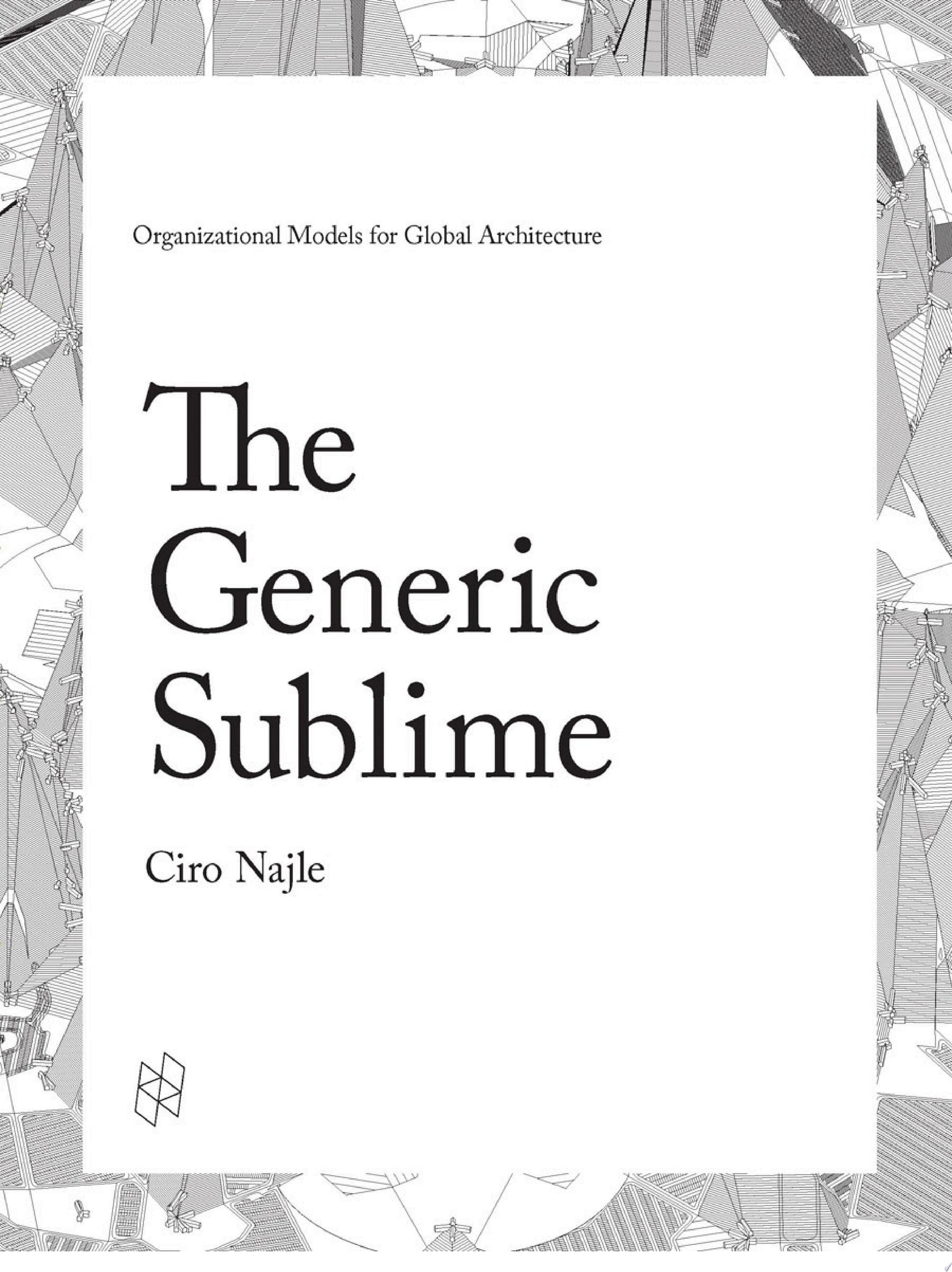
The Generic Sublime
0
0
As an Amazon Associate and affiliate partner, Menrva Books earns from qualifying purchases. Learn more
Author Description
The Generic Sublime is the outcome of an investigation on extra-extra-large developmental typologies carried out at the Harvard University Graduate School of Design, Departments of Architecture, Urban Design and Planning, and Landscape Architecture, between the years 2010 and 2013. The book assembles this investigation and structures its materials, methods and outcomes along three parts. The first part includes a series of writings by the author and invited theoreticians and practitioners toward debating, substantiating or challenging the theory of the Generic Sublime, as presented by the book. The second part proposes three operative taxonomies, understood as the consecutive steps in a procedure going from the actual to the prospective by means of a process of abstraction and integration: a first one portraying a series of case studies that exemplify developmental phenomena currently at work around the globe; a second one presenting a set of organizational models and introducing an open manual of processes and techniques for breeding the contemporary sublime out of the ordinary; and a third part displaying propositions that singularize the investigation across a series of projects. The book ends with a third and final part, which includes a series of concluding open-ended texts: a public conversation on the sublime, a personal interview on methods, a dialogue-glossary of concepts, a technical-theoretical report, and a conclusive set of principles.
Menrva's Summary
THE THESIS
The Generic Sublime investigates the theoretical and practical implications of large-scale developmental typologies in contemporary architecture and urban design. The book is structured into three parts, beginning with a collection of essays from the author and invited experts that debate the core theory. The second part introduces operative taxonomies and case studies, presenting methods for generating the 'contemporary sublime' from ordinary development. The final part offers concluding texts, including conversations, interviews, and a glossary of concepts, to further explore the subject.
THE SCOPE MAP
- A series of writings by the author and invited theoreticians and practitioners debating the theory of the Generic Sublime.
- Three operative taxonomies detailing a procedure from the actual to the prospective through abstraction and integration.
- Case studies exemplifying developmental phenomena currently at work globally.
- An open manual of processes and techniques for cultivating the contemporary sublime from the ordinary.
- Propositions that singularize the investigation across a series of projects.
- Concluding open-ended texts: a public conversation on the sublime, a personal interview on methods, a dialogue-glossary of concepts, a technical-theoretical report, and a conclusive set of principles.
THE AUTHORITY PERSPECTIVE
The book is presented as the outcome of an academic investigation conducted at Harvard University's Graduate School of Design. Its structure suggests a rigorous academic approach, moving from theoretical debate to practical application and concluding with reflective texts. The inclusion of invited theoreticians and practitioners indicates an engagement with a broader academic and professional discourse in architecture and urban design.
Page Count:
400
Publication Date:
2016-12-01
Publisher:
Actar D
ISBN-10:
1945150319
ISBN-13:
9781945150319
Architecture
Non-Fiction
Urban Design
Theory
Community Tags
Similar Books