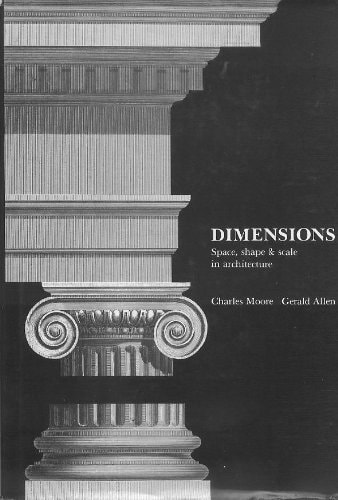
Dimensions. Space, shape & scale in architecture.
0
0
As an Amazon Associate and affiliate partner, Menrva Books earns from qualifying purchases. Learn more
Author Description
Dimensions and their architectural products - space, shape and scale - are essential concepts, the basic stuff of everyday design. Architect-authors Charles Moore and Gerald Allen feel that these terms are basically misunderstood among architects and laymen alike, and have written this important new book not only for architects who design new buildings, but also for all who want to learn to appreciate architecture and who must live their lives with what architects have built.Dimensions, the authors show, are not just the familiar ones of height, width and depth which designers so often focus on, but in fact include any variable which can be changed without affecting any of the others. Thus the temperature in a room, or the amount of sunlight, or the color, or the psychic pleasure that they all create are all dimensions, too - and all of them must be the necessary concern of architect.In concise opening essays, Allen and Moore describe space (that celebrated but often illusory product of architecture), shape (which carries the meaning of things) and scale (the relative size and importance of things) with a clarity that gives as good a definition of these abstract concepts as exists today. They then go on to a broad range of case studies, "walking tours" of individual buildings and places, which show how these concepts can be applied (and sometimes misapplied) in the man-made world.
Menrva's Summary
THE THESIS
This book investigates the fundamental architectural concepts of space, shape, and scale to redefine how designers and the public perceive the built environment. Authors Charles Moore and Gerald Allen, both established architects, argue that these terms are frequently misunderstood and limited to simple physical measurements. They propose an expanded framework where dimensions encompass any variable—including environmental factors and psychological impact—that influences the human experience of a structure.
THE SCOPE MAP
What You Will Find
- Theoretical definitions of space, shape, and scale in design
- Analysis of environmental variables like light, temperature, and color as architectural dimensions
- Case studies and descriptive walking tours of specific buildings and public spaces
Scope Limits
- Does not provide technical construction manuals or structural engineering specifications
- Does not cover historical architectural movements in chronological order
THE AUTHORITY PERSPECTIVE
Experts and practitioners frequently cite this work for its ability to distill complex abstract concepts into accessible prose for both professionals and laypeople. Readers often note that the text remains a foundational resource for understanding the qualitative aspects of architectural design.
Page Count:
192
Publication Date:
1976-01-01
Publisher:
Architectural Record Books
ISBN-10:
0070023360
ISBN-13:
9780070023369
Non-Fiction
Architecture
Theory
Design
Architecture
Community Tags
Similar Books