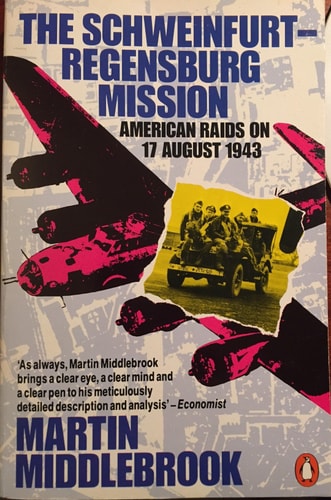
The Schweinfurt-Regensburg Mission: American Raids on 17 August 1943
0
0
As an Amazon Associate and affiliate partner, Menrva Books earns from qualifying purchases. Learn more
Author Description
On August 17, 1943, the entire strength of the American heavy bomber forces in England set out to raid two vital industrial targets deep in southern Germany. For American commanders it was the culmination of years of planning and hoping, the day when their defensive formations of Flying Fortresses could at last perform their true role and reach out by daylight to strike at targets in the deepest corners of industrial Germany. The day ended in disaster. Thanks to the courage of the aircrews, the bombers broke through to the targets and caused heavy damage, but sixty of the planes were shot down and the hopes of the American commanders were shattered. Historically, it was probably the most important day for the American air forces during the Second World War.
Menrva's Summary
THE THESIS
This work investigates the strategic failure and tactical consequences of the Schweinfurt-Regensburg mission, questioning the viability of daylight precision bombing during the Second World War. Martin Middlebrook, a recognized military historian, utilizes extensive archival research and personal interviews with surviving aircrews to reconstruct the events of August 17, 1943. The book argues that while the mission achieved its industrial objectives, the catastrophic loss of aircraft forced a fundamental reassessment of American air power doctrine and defensive capabilities.
THE SCOPE MAP
What You Will Find
- Detailed operational analysis of the Eighth Air Force mission to Schweinfurt and Regensburg.
- Technical breakdown of the B-17 Flying Fortress defensive formations.
- First-hand accounts from both American bomber crews and German Luftwaffe pilots.
Scope Limits
- The text focuses primarily on the events of August 17, 1943, rather than the entirety of the 1943 air campaign.
- It does not provide an exhaustive history of the German industrial response beyond the immediate impact of the raid.
THE AUTHORITY PERSPECTIVE
Military historians frequently cite this work as a definitive account of the mission due to its balanced use of primary sources from both sides of the conflict. Readers often note the clinical, detailed nature of the prose which provides a clear understanding of the tactical challenges faced by the aircrews.
Page Count:
384
Publication Date:
1990-08-07
Publisher:
Penguin Books
ISBN-10:
0140066780
ISBN-13:
9780140066784
Non-Fiction
History
World War
Military History
Military
Americas
Aviation History
Community Tags
Similar Books