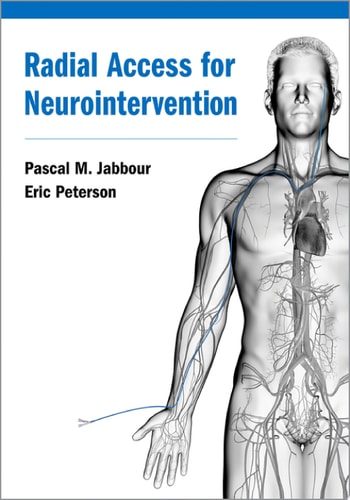
Radial Access for Neurointervention
0
0
As an Amazon Associate and affiliate partner, Menrva Books earns from qualifying purchases. Learn more
Author Description
For the longest time, neuroendovascular procedures have been done through the femoral artery (TFA) located in the thigh and groin region. Over the last decade, interventional cardiologists have pioneered a newer approach: by utilizing the radial artery in the wrist to access the arterial system, a new procedure has been employed: radial access. Numerous studies and randomized controlled trials have demonstrated this to be a safer way of performing endovascular procedures, and a majority of the interventional cardiac procedures are performed via radial access.The neurointerventional community, however, has been slow to adopt this innovation. The radial access innovation is finally making its way to the neurointerventional community. Radial Access for Neurointervention has all the literature supporting illustrating how radial access is useful to the neuro community. Detailed chapters describe the techniques of radial access including positioning the patient on the table, driving the microcatheters intracranially, aneurysms treatment, AVM/AVF embolizations, complications management, and more. Readily enhanced throughout with pictures and movies, this first-of-its-kind book will guide neurointerventionalists to transition their practices to radial first.
Menrva's Summary
THE THESIS
This text investigates the clinical transition from femoral to radial artery access for neuroendovascular procedures, arguing for the safety and efficacy of the radial approach. Authors Eric Peterson and Pascal Jabbour synthesize current randomized controlled trials and clinical data to provide a comprehensive framework for neurointerventionalists. The book serves as a technical manual for adopting radial-first practices, addressing the historical hesitation within the neurointerventional community to shift away from traditional femoral access methods.
THE SCOPE MAP
What You Will Find
- Technical protocols for patient positioning and arterial access in the wrist.
- Step-by-step guidance for intracranial microcatheter navigation.
- Clinical methodologies for treating aneurysms and performing AVM/AVF embolizations.
- Evidence-based strategies for managing procedural complications.
THE AUTHORITY PERSPECTIVE
Experts identify this work as a foundational resource for neurointerventionalists seeking to modernize their surgical practice. Readers frequently note the practical utility of the included visual aids and procedural movies in facilitating the transition to radial access techniques.
Page Count:
160
Publication Date:
2021-07-16
Publisher:
Oxford University Press
ISBN-10:
0197524176
ISBN-13:
9780197524176
Medical
Neurology
Surgery
Radiology
Community Tags
Similar Books