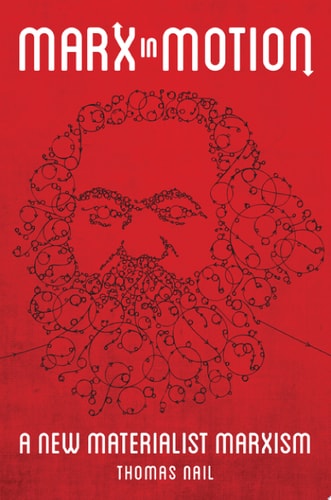
Marx in Motion: A New Materialist Marxism
0
0
As an Amazon Associate and affiliate partner, Menrva Books earns from qualifying purchases. Learn more
Author Description
Karl Marx is the most historically foundational and systematic critic of capitalism to date, and the years since the 2008 financial crisis have witnessed a rebirth of his popular appeal. In a world of rising income inequality, right-wing nationalisms, and global climate change, people are again looking to the father of modern socialism for answers. As this book argues, every era since Marx's death has reinvented him to fit its needs. There is not one Marx forever and for all time. There are a thousand Marxes. As Thomas Nail contends, one of the most significant contributions of Marx's work is that it treats theory itself as a historical practice. Reading Marx is not just an interpretative activity but a creative one. As our historical conditions change, so do the kinds of questions we pose and the kinds of answers we find in Marx's writing. This book is a return to the writings of Karl Marx, including his under-appreciated dissertation, through the lens of the pressing philosophical and political problems of our time: ecological crisis, gender inequality, colonialism, and global mobility. However, the aim of this book is not to make Marxism relevant by "applying" it to contemporary issues. Instead, Marx in Motion, the first new materialist interpretation of Marx's work, treats Capital as if it were already a response to the present. Thomas Nail argues that Marx was a new materialist avant la lettre. He argues that Marx did not believe history was determined, or that matter was passive, or that humans were separate or superior to nature. Marx did not even have a labor theory of value. Marxists argue that new materialists lack a sufficient political and economic theory, and new materialists argue that Marx's materialism is human-centric and mechanistic. This book aims to solve both problems by proposing a new materialist Marxism.
Menrva's Summary
THE THESIS
Can a new materialist interpretation of Karl Marx’s work provide a more effective framework for addressing contemporary crises like ecological collapse and global inequality? Thomas Nail, a philosopher known for his work on movement and political theory, challenges traditional readings of Marx by arguing that he was a new materialist before the term existed. By rejecting deterministic and human-centric interpretations, Nail proposes a synthesis that bridges the gap between Marxist political economy and contemporary new materialist philosophy.
THE SCOPE MAP
What You Will Find
- A re-evaluation of Marx’s early writings, including his often-overlooked doctoral dissertation.
- A critical analysis of the labor theory of value and its historical interpretations.
- A philosophical framework that treats theory as a dynamic, historical practice rather than a static doctrine.
- Application of new materialist concepts to modern issues such as climate change, colonialism, and global mobility.
THE AUTHORITY PERSPECTIVE
Scholars and students of political theory recognize this text as a provocative intervention in contemporary Marxist studies. Readers frequently note the dense philosophical prose, which requires a foundational understanding of both classical Marxism and new materialist thought to fully grasp the author's arguments.
Page Count:
261
Publication Date:
2020-01-01
Publisher:
Oxford University Press
ISBN-10:
0197526500
ISBN-13:
9780197526507
Philosophy
Economics
Socialism
Marxism
Social Theory
Community Tags
Similar Books