Ciprian Mureșan Drawings, 2004-2015
0
0
As an Amazon Associate and affiliate partner, Menrva Books earns from qualifying purchases. Learn more
Author Description
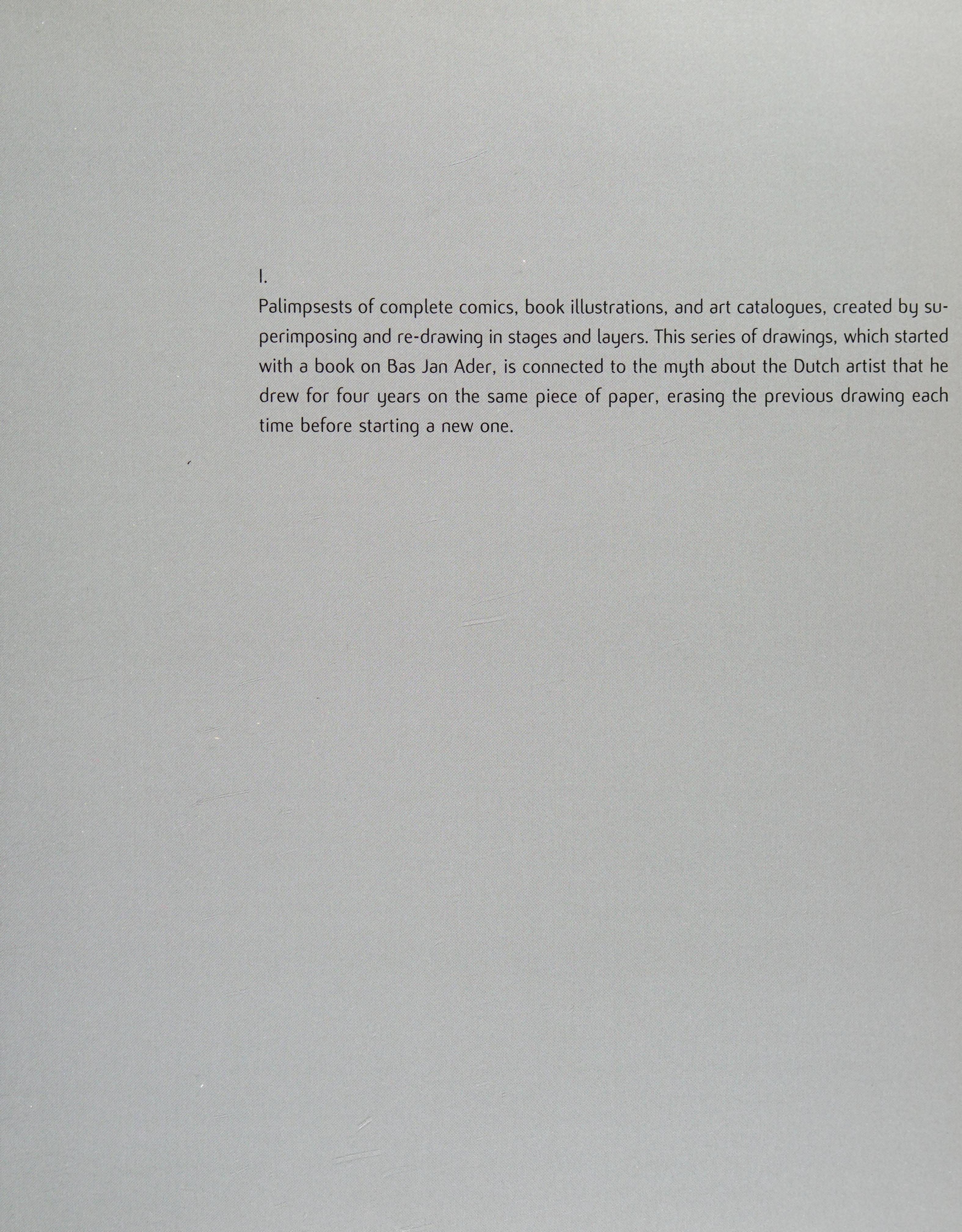
Never employed as an instrument for direct notation, for Ciprian Muresan (*1977 in Dej) drawing functions in equations that envelop this mode of production in a reflection on visibility and loss, on historical suspension, and ways in which the past is retrieved. Based on the artist's diverse artistic output, the volume surveys the forms in which drawing recurs in Muresan's practice. It foregrounds lines of continuity between earlier works, such as cheat sheets onto which The Gospel of John has been transcribed, and recent projects in which, for instance, all of the reproductions in books on Antonello da Messina or Kasimir Malevich are copied onto a single sheet of paper. Essays contextualize Muresan's drawings in their fraught relation to art history, remembrance, and conservation as well as against shifting notions of labor.
Menrva's Summary
THE THESIS
This volume explores the multifaceted role of drawing in Ciprian Mureșan's artistic practice. Mureșan, born in 1977, utilizes drawing not for direct notation but as a tool for reflection on visibility, loss, historical suspension, and the retrieval of the past. The book surveys the forms drawing takes across his diverse output, highlighting continuities from early works like transcriptions of scripture onto cheat sheets to recent projects involving the meticulous copying of reproductions from art history books onto single sheets. The essays within provide context for Mureșan's drawings in relation to art history, remembrance, conservation, and evolving notions of labor.
THE SCOPE MAP
- Surveys the forms drawing takes in Ciprian Mureșan's artistic practice.
- Examines Mureșan's use of drawing as a mode of reflection on visibility and loss.
- Highlights continuities between earlier works (e.g., transcriptions of text) and recent projects (e.g., copying reproductions).
- Contextualizes drawings in relation to art history, remembrance, and conservation.
- Discusses shifting notions of labor as reflected in Mureșan's drawing practice.
- Features essays that provide critical and historical context for the artist's work.
- Focuses on the period between 2004 and 2015, as indicated by the title.
THE AUTHORITY PERSPECTIVE
This volume is presented as a comprehensive survey of Ciprian Mureșan's drawing practice, focusing on its conceptual underpinnings and its relationship with art history. The essays aim to contextualize his work within broader discussions of remembrance, conservation, and labor. The book's structure suggests an in-depth exploration for those interested in contemporary drawing and the artist's specific methodologies. The focus on Mureșan's unique approach to drawing as a reflective tool rather than mere notation is a key aspect highlighted by the description.
Page Count:
207
Publication Date:
2015-01-01
Publisher:
Hatje Cantz
ISBN-10:
3775739645
ISBN-13:
9783775739641
Non-Fiction
Art
Contemporary Art
Drawing
Community Tags
Similar Books