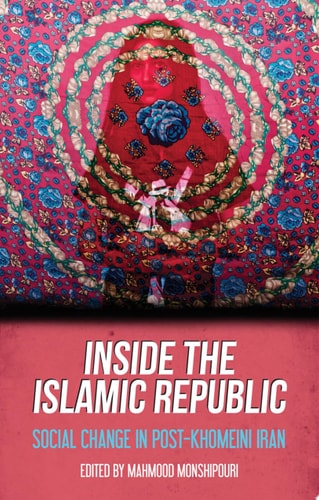
Inside the Islamic Republic
0
0
As an Amazon Associate and affiliate partner, Menrva Books earns from qualifying purchases. Learn more
Author Description
The Post-khomenei Era Has Profoundly Changed The Socio-political Landscape Of Iran. Since 1989, The Internal Dynamics Of Change In Iran, Rooted In A Panoply Of Socioeconomic, Cultural, Institutional, Demographic, And Behavioral Factors, Have Led To A Noticeable Transition In Both Societal And Governmental Structures Of Power, As Well As The Way In Which Many Iranians Have Come To Deal With The Changing Conditions Of Their Society. This Is All Exacerbated By The Global Trend Of Communication And Information Expansion, As Iran Has Increasingly Become The Site Of The Burgeoning Demands For Women's Rights, Individual Freedoms, And Festering Tensions And Conflicts Over Cultural Politics. These Realities, Among Other Things, Have Rendered Iran A Country Of Unprecedented-and At Time Paradoxical-changes. This Book Explains How And Why.
Menrva's Summary
THE THESIS
This book investigates the complex socio-political transformation of Iran in the post-Khomeini era, seeking to explain the drivers of change within its governmental and societal structures. Mahmood Monshipouri, a scholar specializing in Middle Eastern politics and human rights, utilizes a multi-dimensional framework to analyze how demographic shifts, institutional pressures, and global communication trends have reshaped the Islamic Republic. By examining the intersection of cultural politics and individual agency, the author argues that Iran is undergoing a paradoxical transition that defies simple categorization.
THE SCOPE MAP
What You Will Find
- Analysis of post-1989 internal dynamics including socioeconomic and institutional factors.
- Examination of the impact of global communication and information expansion on Iranian society.
- Discussion of the burgeoning demands for women's rights and individual freedoms.
- Assessment of the tensions and conflicts inherent in contemporary Iranian cultural politics.
THE AUTHORITY PERSPECTIVE
Experts recognize this work as a comprehensive analysis of the internal pressures shaping modern Iran. Readers frequently note the academic density of the prose, which provides a rigorous examination of the country's evolving political landscape.
Page Count:
0
Publication Date:
2016-01-01
Publisher:
Oxford University Press
ISBN-10:
0197548016
ISBN-13:
9780197548011
History
International relations
Sociology
Community Tags
Similar Books