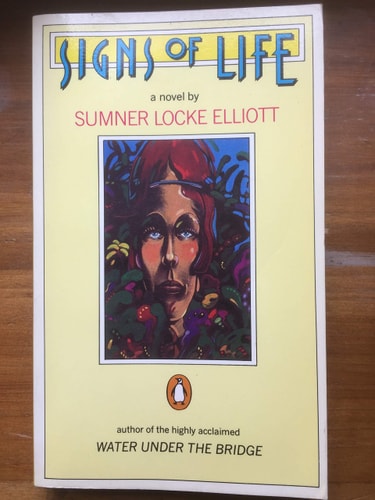
Signs of Life
0
0
As an Amazon Associate and affiliate partner, Menrva Books earns from qualifying purchases. Learn more
Author Description
Virginia Green lies dying. Downstairs her kin sit, wait and quarrel. Alone with her memories she coolly charts her long, full life, not by decades but by the people she has loved: her mother Grace who could only survive by pleasing a man, her grandmother Irene who showed Virginia that love has many faces, the men she has loved herself, and their betrayals. Yet, at the end, Virginia is convinced "that the only sin of this world is not to love".
Menrva's Summary
THE PULSE
As Virginia Green approaches the end of her life, she navigates the complex landscape of her past while her family waits in the rooms below. Confined to her bed, Virginia reconstructs her history through the lens of the individuals who shaped her identity. She evaluates her relationships with her mother, Grace, and her grandmother, Irene, alongside the men who defined her romantic history. The narrative operates as a reflective internal monologue, contrasting the quiet intimacy of her memories with the external friction of her kin. The structure emphasizes the subjective nature of time, prioritizing emotional significance over chronological progression.
INSIDE THE PAGES
- Introspective first-person narrative perspective
- Non-linear exploration of memory and past events
- Focus on multi-generational family dynamics
- Examination of gender roles and societal expectations
- Exploration of romantic betrayal and resilience
- Character-driven pacing centered on internal reflection
- Minimalist setting confined to a single location
- Thematic focus on the necessity and complexity of love
THE COLLECTIVE ECHO
Readers and critics often highlight the author's ability to maintain a sharp, observational tone despite the somber subject matter of a dying protagonist. Discussion frequently centers on the effectiveness of the non-linear structure, which allows the reader to piece together Virginia's life through fragmented, meaningful encounters. Many note that the prose remains restrained, avoiding sentimentality while exploring the weight of past betrayals and familial bonds. The balance between the claustrophobic present and the expansive, vivid past is frequently cited as a primary strength of the work. Readers often find the final philosophical conclusion regarding the nature of love to be a poignant anchor for the entire narrative.
Page Count:
288
Publication Date:
1982-01-01
Publisher:
Penguin
ISBN-10:
0140062432
ISBN-13:
9780140062434
Fiction
Contemporary
Literary Fiction
Family Saga
Character Study
British & Irish
Community Tags
Similar Books