
Dombey and Son
0
0
As an Amazon Associate and affiliate partner, Menrva Books earns from qualifying purchases. Learn more
Author Description
Dombey and Son is both a firm and a family and the ambiguous connection between public and private life lies at the heart of Dickens' novel. Paul Dombey is a man who runs his domestic affairs as he runs his business: calculatingly, callously, coldly and commercially. Through his dysfunctional relationships with his son, his two wives, and his neglected daughter Florence, Dickens paints a vivid picture of the limitations of a society dominated by commercial values and the drive for profit andexplores the possibility of moral and emotional redemption through familial love.
Menrva's Summary
THE PULSE
The rigid, profit-driven worldview of Paul Dombey collides with the emotional needs of his neglected family, triggering a slow disintegration of his domestic and professional life. Paul Dombey, a wealthy merchant, views his children as mere extensions of his business enterprise, prioritizing his son as a future heir while dismissing his daughter, Florence, as an inconsequential asset. His cold, calculating nature creates a vacuum of affection that forces those around him to navigate the harsh realities of Victorian social stratification and the consequences of emotional neglect. The narrative unfolds through a third-person perspective, utilizing Dickens' signature expansive style to track the parallel decline of the Dombey firm and the moral awakening of its patriarch. The story operates within the strict logical constraints of 19th-century commerce, where status and capital often supersede human connection.
INSIDE THE PAGES
- Extensive use of social satire to critique Victorian commercialism
- Character-driven exploration of emotional repression
- Intricate subplots involving the London merchant class
- Symbolic representation of the railway as a force of change
- Detailed depiction of 19th-century domestic life
- Thematic focus on the tension between public reputation and private morality
- Use of caricature to highlight societal flaws
- Gradual shift from cold detachment to potential redemption
THE COLLECTIVE ECHO
Discussion often centers on the effectiveness of Dickens' critique of the dehumanizing nature of industrial capitalism. Readers frequently highlight the stark contrast between the cold, sterile environment of the Dombey household and the warmth found in the relationships Florence builds outside her father's influence. Critics often note the pacing of the novel, which balances dense social observation with the slow, deliberate development of the protagonist's internal state. The work is widely recognized for its ability to weave personal tragedy into a broader commentary on the values of the Victorian era. Many readers find the evolution of the central characters to be a compelling study in the necessity of empathy over profit-seeking behavior.
Page Count:
992
Publication Date:
1982-01-01
Publisher:
Penguin Books Ltd
ISBN-10:
0140061118
ISBN-13:
9780140061116
Business
Fiction
British & Irish
Classic Literature
Classics
Realism
Family Saga
Social Commentary
Genre Fiction
Literature & Fiction
Victorian
Community Tags
Other Editions(10)

Independently Published
2018
Default edition
CreateSpace Independent Publishing Platform
2017

Creative Media Partners, LLC
2015

Creative Media Partners, LLC
2015

Creative Media Partners, LLC
2015

CreateSpace Independent Publishing Platform
2015

Oxford University Press
2008

OUP Oxford
2008
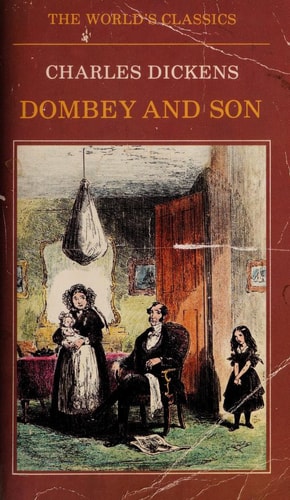
Oxford University Press
1982
Penguin Books Ltd
1982
Similar Books











Reader Comments
Share Your Thoughts
No comments yet. Be the first to share your thoughts!