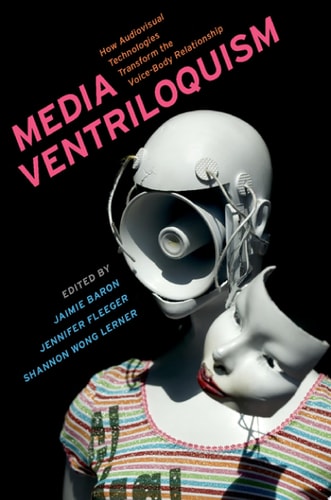
Media Ventriloquism: How Audiovisual Technologies Transform the Voice-Body Relationship
0
0
As an Amazon Associate and affiliate partner, Menrva Books earns from qualifying purchases. Learn more
Author Description
The word "ventriloquism" has traditionally referred to the act of throwing one's voice into an object that appears to speak. Media Ventriloquism repurposes the term to reflect our complex vocal relationship with media technologies. The 21st century has offered an array of technological means to separate voice from body, practices which have been used for good and ill. We currently zoom about the internet, in conversations full of audio glitches, using tools that make it possible to live life at a distance. Yet at the same time, these technologies subject us to the potential for audiovisual manipulation. But this voice/body split is not new. Radio, cinema, television, video games, digital technologies, and other media have each fundamentally transformed the relationship between voice and body in myriad and often unexpected ways. This book explores some of these experiences of ventriloquism and considers the political and ethical implications of separating bodies from voices. The essays in the collection, which represent a variety of academic disciplines, demonstrate not only how particular bodies and voices have been (mis)represented through media ventriloquism, but also how marginalized groups - racialized, gendered, and queered, among them - have used media ventriloquism to claim their agency and power.
Menrva's Summary
THE THESIS
How do audiovisual technologies fundamentally alter the relationship between the human voice and the physical body? This collection of essays examines the historical and contemporary phenomenon of "media ventriloquism," where digital and analog tools decouple vocal expression from its biological source. The contributors, representing diverse academic disciplines, analyze the ethical, political, and social consequences of this separation, arguing that while these technologies facilitate manipulation, they also provide a platform for marginalized groups to assert agency.
THE SCOPE MAP
What You Will Find
- Historical analysis of voice-body separation in radio, cinema, and television.
- Examination of digital-era audiovisual manipulation and audio glitches.
- Case studies on how racialized, gendered, and queer groups utilize media ventriloquism for empowerment.
- Theoretical frameworks regarding the political and ethical implications of mediated communication.
THE AUTHORITY PERSPECTIVE
Experts identify this collection as a significant contribution to the intersection of media theory and vocal studies. Readers frequently note the academic density of the prose, which provides a rigorous foundation for understanding the power dynamics inherent in modern communication technologies.
Page Count:
302
Publication Date:
2021-01-01
Publisher:
Oxford University Press
ISBN-10:
0197563651
ISBN-13:
9780197563656
Communication
Media Studies
Humanities
Radio
Technology
Sociology
Community Tags
Similar Books