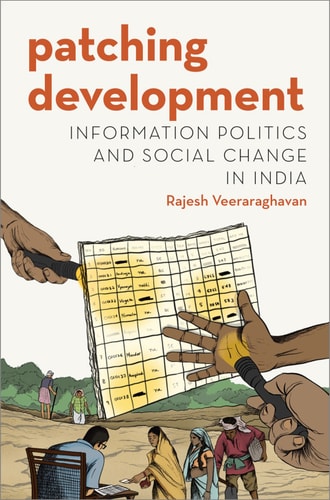
Patching Development: Information Politics and Social Change in India
0
0
As an Amazon Associate and affiliate partner, Menrva Books earns from qualifying purchases. Learn more
Author Description
Diving into an original and unusually positive case study from India, Patching Development shows how development programs can be designed to work.How can development programs deliver benefits to marginalized citizens in ways that expand their rights and freedoms? Political will and good policy design are critical but often insufficient due to resistance from entrenched local power systems. In Patching Development, Rajesh Veeraraghavan presents an ethnography of one of the largest development programs in the world, the Indian National Rural Employment Guarantee Act (NREGA), and examines NREGA's implementation in the South Indian state of Andhra Pradesh. He finds that the local system of power is extremely difficult to transform, not because of inertia, but because of coercive counter strategy from actors at the last mile and their ability to exploit information asymmetries. Upper-level NREGA bureaucrats in Andhra Pradesh do not possess the capacity to change the power axis through direct confrontation with local elites, but instead have relied on a continuous series of responses that react to local implementation and information, a process of patching development. "Patching development" is a top-down, fine-grained, iterative socio-technical process that makes local information about implementation visible through technology and enlists participation from marginalized citizens through social audits. These processes are neither neat nor orderly and have led to a contentious sphere where the exercise of power over documents, institutions and technology is intricate, fluid and highly situated. A highly original account with global significance, this book casts new light on the challenges and benefits of using information and technology in novel ways to implement development programs.
Menrva's Summary
THE THESIS
How can large-scale development programs effectively deliver benefits to marginalized populations despite the resistance of entrenched local power structures? Rajesh Veeraraghavan, a scholar of information politics and development, utilizes his extensive ethnographic research on the Indian National Rural Employment Guarantee Act (NREGA) to argue that top-down, iterative socio-technical interventions—termed 'patching'—are necessary to navigate information asymmetries. By analyzing the implementation of NREGA in Andhra Pradesh, the author demonstrates that bureaucratic success relies on continuous, reactive adjustments rather than static policy design, providing a framework for understanding how technology and social audits can shift power dynamics at the local level.
THE SCOPE MAP
What You Will Find
- An ethnographic analysis of the Indian National Rural Employment Guarantee Act (NREGA) in Andhra Pradesh.
- A detailed examination of 'patching' as a socio-technical methodology for policy implementation.
- Primary source data regarding information asymmetries and local power dynamics.
- A critical evaluation of how technology and social audits facilitate citizen participation in development.
THE AUTHORITY PERSPECTIVE
Experts in development studies and political science recognize this work as a significant contribution to the understanding of bureaucratic processes in the Global South. Readers frequently note the academic density of the prose, which provides a rigorous, evidence-based look at the complexities of institutional reform.
Page Count:
254
Publication Date:
2021-01-01
Publisher:
Oxford University Press
ISBN-10:
0197567843
ISBN-13:
9780197567845
Comparative Politics
Developing Countries
Public Policy
Sociology
Technology
India
Community Tags
Other Editions(2)
Similar Books