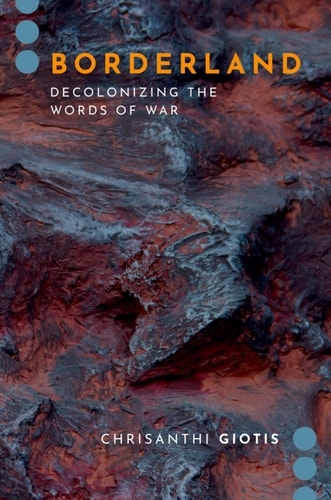
Borderland: Decolonizing the Words of War
0
0
As an Amazon Associate and affiliate partner, Menrva Books earns from qualifying purchases. Learn more
Author Description
Every two seconds a person is displaced, caught in one of the more than 40 active conflicts around the world that show no sign of ending. Since 1994, there has been ongoing war in the Democratic Republic of Congo, which has uprooted millions of people and resulted in the deaths of millions more. In the West, we have entered a political era where our border policies are underpinned by unending wars. At this critical juncture, how can journalists, especially those engaged in foreign correspondence, tell these stories? How can they make connections across time and space, and across politics, economics, environments, and crucially, people? Given its colonial history, are these connections possible for the profession of foreign correspondence?In Borderland, Chrisanthi Giotis argues that decolonization is possible and necessary for the development of a truly global, public sphere. New global narratives need to meaningfully include the voices, and knowledge, of those with the least power who are caught in resource-fuelled wars. Drawing on insights from postcolonial studies, international relations, development studies, and philosophy, which are brought to life through auto-ethnographic descriptions and analysis of "behind-the-scenes" events, Giotis introduces new reporting techniques for foreign correspondents. Borderland argues that decolonized reporting techniques will help journalists--and their audiences--move beyond the sociohistorical and political myopia that prevents us from communicating and understanding the reality of a complex world.
Menrva's Summary
THE THESIS
Can the profession of foreign correspondence overcome its colonial history to foster a truly global, public sphere capable of reporting on resource-fueled conflicts? Chrisanthi Giotis, an expert in political communication, examines the systemic limitations of Western media coverage regarding displaced populations and unending wars. By synthesizing postcolonial theory, development studies, and philosophy, the author proposes a framework for decolonized reporting that prioritizes the knowledge and voices of marginalized individuals caught in global conflicts.
THE SCOPE MAP
What You Will Find
- Analysis of the intersection between border policies and modern foreign correspondence.
- New reporting techniques designed to mitigate sociohistorical and political myopia.
- Auto-ethnographic accounts of behind-the-scenes journalistic practices.
- Theoretical integration of postcolonial studies, international relations, and development studies.
THE AUTHORITY PERSPECTIVE
Experts identify this work as a critical intervention in the field of political communication and media ethics. Readers frequently note the academic density of the prose, which serves as a foundational text for those studying the intersection of journalism and global power structures.
Page Count:
288
Publication Date:
2022-01-01
Publisher:
Oxford University Press
ISBN-10:
0197565824
ISBN-13:
9780197565827
Sociology
Communication
International relations
Technology & Engineering
Trades & Technology
Journalism
Community Tags
Similar Books