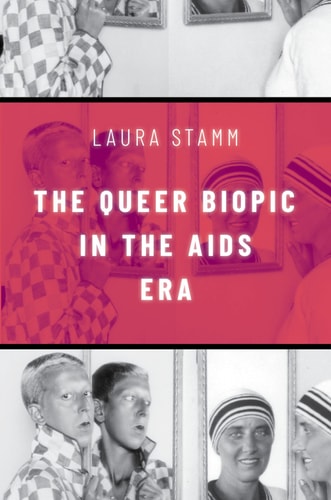
The Queer Biopic in the AIDS Era
0
0
As an Amazon Associate and affiliate partner, Menrva Books earns from qualifying purchases. Learn more
Author Description
The Queer Biopic in the AIDS Era offers a new account of the AIDS crisis and the emergence of New Queer Cinema. Author Laura Stamm asks why queer filmmakers repeatedly produced biographical films of queer individuals living and dead throughout the years surrounding the AIDS crisis. Queer filmmakers' engagement with the biopic evokes the genre's history of building life through the portrayal of lives worthy of admiration and emulation but it also points to another biopic history; that of representing lives damaged. By portraying lives damaged by inconceivable loss, queer filmmakers challenge the illusion of a coherent self presumably reinforced by the biopic genre and in doing so, their films open the potential for new means of connection and relationality. The Queer Biopic in the Aids Era features fresh readings of the cinema of Derek Jarman, John Greyson, Todd Haynes, Barbara Hammer, and Tom Kalin. By calling for a reappraisal of the queer biopic, this book also calls for a reappraisal of New Queer-Cinema's legacy and its influence of contemporary queer film.As a whole, this book pays particular attention to the biopic's queer resonances, opening up its historical connections to projects of education, public health, and social hygiene, along with the production of a shared history and national identity.
Menrva's Summary
THE THESIS
This book investigates why queer filmmakers utilized the biographical film genre as a primary vehicle for representing queer lives during the height of the AIDS crisis. Author Laura Stamm examines the intersection of the biopic genre with the emergence of New Queer Cinema, arguing that these films intentionally subvert traditional notions of the coherent self. By analyzing how filmmakers represent lives damaged by loss, the text posits that the queer biopic functions as a site for exploring new forms of relationality and historical connection. Stamm draws upon a range of cinematic works to demonstrate how the genre was repurposed to address public health, social hygiene, and the construction of queer identity.
THE SCOPE MAP
What You Will Find
- Critical analysis of the biopic genre's historical role in constructing national identity and public education.
- Detailed case studies of films by directors including Derek Jarman, John Greyson, Todd Haynes, Barbara Hammer, and Tom Kalin.
- An examination of the tension between the biopic's traditional focus on admirable lives and the queer focus on lives marked by loss.
- A reappraisal of the legacy of New Queer Cinema and its ongoing influence on contemporary film practices.
THE AUTHORITY PERSPECTIVE
Scholars and film critics recognize this work as a significant contribution to the study of queer cinema and genre theory. Readers frequently note the academic density of the prose, which provides a rigorous framework for understanding the political and social dimensions of the AIDS-era biopic.
Page Count:
218
Publication Date:
2021-01-01
Publisher:
Oxford University Press
ISBN-10:
0197604064
ISBN-13:
9780197604069
Film Studies
Motion pictures
Gender Studies
Queer Studies
Cinema History
Biographical Films
Community Tags
Similar Books