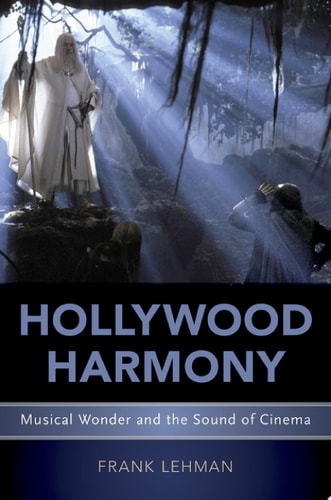
Hollywood Harmony: Musical Wonder and the Sound of Cinema
0
0
As an Amazon Associate and affiliate partner, Menrva Books earns from qualifying purchases. Learn more
Author Description
Film music often tells us how to feel, but it also guides us how to hear. Filmgoing is an intensely musical experience, one in which the soundtrack structures our interpretations and steers our emotions. Hollywood Harmony explores the inner workings of film music, bringing together tools from music theory, musicology, and music psychology in this first ever book-length analytical study of this culturally central repertoire. Harmony, and especially chromaticism, is emblematic of the "film music sound," and it is often used to evoke that most cinematic of feelings-wonder. To help parse this familiar but complex musical style, Hollywood Harmony offers a first-of-its kind introduction to neo-Riemannian theory, a recently developed and versatile method of understanding music as a dynamic and transformational process, rather than a series of inert notes on a page. This application of neo-Riemannian theory to film music is perfect way in for curious newcomers, while also constituting significant scholarly contribution to the larger discipline of music theory. Author Frank Lehman draws from his extensive knowledge of cinematic history with case-studies that range from classics of Golden Age Hollywood to massive contemporary franchises to obscure cult-films. Special emphasis is placed on scores for major blockbusters such as Lord of the Rings, Star Wars, and Inception. With over a hundred meticulously transcribed music examples and more than two hundred individual movies discussed, Hollywood Harmony will fascinate any fan of film and music.
Menrva's Summary
THE THESIS
How does the specific harmonic language of film music, particularly chromaticism, function to evoke the cinematic sensation of wonder? Frank Lehman, a scholar of music theory, utilizes a multidisciplinary framework that integrates musicology, music theory, and psychology to analyze the mechanics of the Hollywood soundtrack. He argues that film music is a dynamic, transformational process rather than a static collection of notes, proposing neo-Riemannian theory as the primary analytical lens for understanding this repertoire.
THE SCOPE MAP
What You Will Find
- An introduction to neo-Riemannian theory applied to cinematic scores
- Analysis of harmonic structures and chromaticism in film music
- Over one hundred musical transcriptions and examples
- Case studies covering Golden Age classics, contemporary blockbusters, and cult films
Scope Limits
- The text focuses primarily on harmonic and transformational analysis rather than the broader cultural or sociological history of film production.
THE AUTHORITY PERSPECTIVE
Experts recognize this work as a significant contribution to the field of music theory, specifically for its novel application of neo-Riemannian methods to popular media. Readers frequently note the academic density of the prose, which serves as a rigorous resource for both scholars and dedicated students of film music.
Page Count:
310
Publication Date:
2018-01-01
Publisher:
Oxford University Press
ISBN-10:
0190606428
ISBN-13:
9780190606428
Musicology
Academic
Criticism history
Music theory
Humanities
Cinema History
Reference
Film Studies
Community Tags
Other Editions(2)
Similar Books