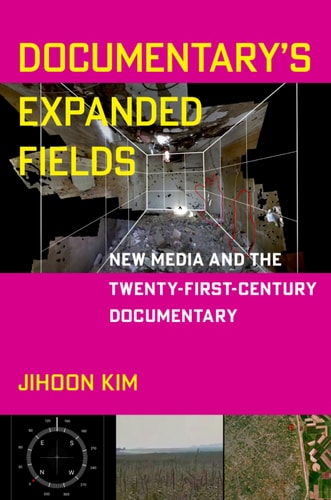
Documentary's Expanded Fields: New Media and the Twenty-First-Century Documentary
0
0
As an Amazon Associate and affiliate partner, Menrva Books earns from qualifying purchases. Learn more
Author Description
Documentary's Expanded Fields: New Media and the Twenty-First-Century Documentary offers a theoretical mapping of contemporary non-standard documentary practices enabled by the proliferation of new digital imaging, lightweight and non-operator digital cameras, multiscreen and interactive interfaces, and web 2.0 platforms. These emergent practices encompass digital data visualizations, digital films that experiment with the deliberate manipulation of photographic records, documentaries based on drone cameras, GoPros, and virtual reality (VR) interfaces, documentary installations in the gallery, interactive documentary (i-doc), citizens' vernacular online videos that document scenes of the protests such as the Arab Spring, the Hong Kong Protests, and the Black Lives Matter Movements, and new activist films, videos, and archiving projects that respond to those political upheavals. Building on the interdisciplinary framework of documentary studies, digital media studies, and contemporary art criticism, Jihoon Kim investigates the ways in which these practices both challenge and update the aesthetic, epistemological, political, and ethical assumptions of traditional film-based documentary. Providing a diverse range of case studies that classify and examine these practices, the book argues that the new media technologies and the experiential platforms outside the movie theater, such as the gallery, the world wide web, and social media services, expand five horizons of documentary cinema: image, vision, dispositif, archive, and activism. This reconfiguration of these five horizons demonstrates that documentary cinema in the age of new media and platforms, which Kim labels as the 'twenty-first-century documentary,' dynamically changes its boundaries while also exploring new experiences of reality and history in times of the contemporary crises across the globe, including the COVID-19 pandemic.
Menrva's Summary
THE THESIS
How do new media technologies and digital platforms fundamentally reconfigure the aesthetic, political, and ethical boundaries of contemporary documentary cinema? Jihoon Kim, a scholar in film and digital media studies, utilizes an interdisciplinary framework to analyze how non-standard documentary practices—ranging from VR interfaces to citizen-led protest videos—challenge traditional film-based assumptions. By examining the shift from the movie theater to galleries and web-based platforms, the author argues that these technologies expand the core horizons of documentary practice: image, vision, dispositif, archive, and activism.
THE SCOPE MAP
What You Will Find
- Analysis of digital imaging, drone cameras, GoPros, and virtual reality interfaces in documentary production.
- Examination of interactive documentary (i-doc) and web 2.0 platforms as new exhibition spaces.
- Case studies of citizen-led vernacular videos documenting global political movements like the Arab Spring and Black Lives Matter.
- A theoretical framework classifying the evolution of documentary cinema across five distinct horizons: image, vision, dispositif, archive, and activism.
THE AUTHORITY PERSPECTIVE
Scholars and media theorists recognize this work as a significant contribution to the study of contemporary documentary forms in the digital age. Readers frequently note the academic density of the prose and the breadth of the case studies provided.
Page Count:
315
Publication Date:
2022-01-01
Publisher:
Oxford University Press
ISBN-10:
019760384X
ISBN-13:
9780197603840
Art Criticism
Film Studies
Documentary
Media Studies
Digital Media
Technology
Community Tags
Similar Books