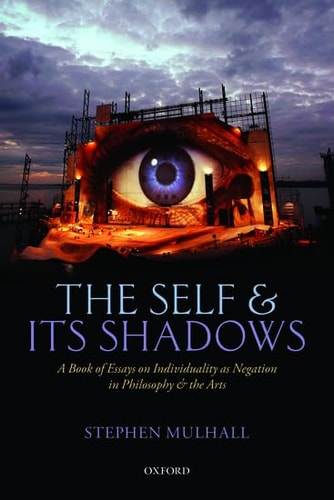
The Self and its Shadows: A Book of Essays on Individuality as Negation in Philosophy and the Arts
0
0
As an Amazon Associate and affiliate partner, Menrva Books earns from qualifying purchases. Learn more
Author Description
Stephen Mulhall presents a series of multiply interrelated essays which together make up an original study of selfhood (subjectivity or personal identity). He explores a variety of articulations (in philosophy, psychoanalysis, and the arts) of the idea that selfhood is best conceived as a matter of non-self-identity--for example, as becoming or self-overcoming, or as being what one is not and not being what one is, or as being doubled or divided. Philosophically, a sustained reading of the work of Nietzsche and Sartre is central to this project, although Wittgenstein is also fundamental to its concerns; Mulhall therefore draws extensively on texts usually associated with 'Continental' philosophical traditions, primarily in order to test the feasibility of a non-elitist form of moral perfectionism. Within the arts, several essays examine various films whose themes intersect with those of the philosophers under study (including Hollywood melodramas, recent spy movies such as the Bourne trilogy and the latest incarnation of James Bond, and David Fincher's 'Benjamin Button'); Wagner's Ring cycle is a recurrent concern; and the novels of Kingsley Amis, J. M. Coetzee and David Foster Wallace are also prominent.
Menrva's Summary
THE THESIS
This book investigates the core question of whether selfhood is most accurately understood as a form of non-self-identity, characterized by negation, division, or self-overcoming. Stephen Mulhall, a noted philosopher, utilizes his expertise in both Continental and analytic traditions to construct a framework that challenges traditional notions of stable personal identity. By synthesizing philosophical inquiry with cultural analysis, he argues for a version of moral perfectionism that remains accessible rather than elitist. The text relies on a rigorous examination of primary philosophical sources alongside contemporary artistic expressions to support this conceptual shift.
THE SCOPE MAP
What You Will Find
- A comparative analysis of Nietzsche, Sartre, and Wittgenstein regarding the nature of the subject.
- A methodology that bridges the gap between high-theory philosophy and popular cultural artifacts.
- Case studies ranging from Wagner’s Ring cycle to the Bourne film trilogy and the novels of David Foster Wallace.
- An exploration of moral perfectionism as a practical, non-elitist mode of living.
THE AUTHORITY PERSPECTIVE
Scholars and critics frequently note the intellectual density of Mulhall’s prose, which requires a high level of familiarity with the philosophical figures discussed. Experts highlight this work as a significant contribution to the intersection of philosophy and cultural studies, particularly for its ability to apply complex existential concepts to modern cinema and literature.
Page Count:
352
Publication Date:
2016-04-01
Publisher:
Oxford University Press
ISBN-10:
0198748221
ISBN-13:
9780198748229
Philosophy
Essays
Self Philosophy
Psychoanalysis
Art Criticism
Literary Criticism
Film Studies
Individuality
Community Tags
Similar Books