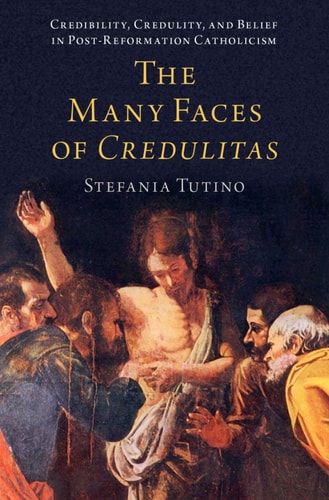
The Many Faces of Credulitas: Credibility, Credulity, and Belief in Post-Reformation Catholicism
0
0
As an Amazon Associate and affiliate partner, Menrva Books earns from qualifying purchases. Learn more
Author Description
This book is about the relationship between belief, credibility, and credulity in post-Reformation Catholicism. It argues that, starting from the end of the sixteenth century and due to different political, intellectual, cultural, and theological factors, credibility assumed a central role in post-Reformation Catholic discourse. This led to an important reconsideration of the relationship between natural reason and supernatural grace and consequently to novel and significant epistemological and moral tensions. From the perspective of the relationship between credulity, credibility, and belief, early modern Catholicism emerges not as the apex of dogmatism and intellectual repression, but rather as an engine for promoting the importance of intellectual judgment in the process of embracing faith. To be sure, finding a balance between conscience and authority was not easy for early modern Catholics. This book seeks to elucidate some of the difficulties, anxieties, and tensions caused by the novel insistence on credibility that came to dominate the theological and intellectual landscape of the early modern Catholic Church. In addition to shedding light on early modern Catholic culture, this book helps us to understand better what it means to believe. For the most part, in modern Western society we don't believe in the same things as our early modern predecessors. Even when we do believe in the same things, it is not in the same way. But believe we do, and thus understanding how early modern people addressed the question of belief might be useful as we grapple with the tension between credibility, credulity, and belief.
Menrva's Summary
THE THESIS
This book investigates how the concepts of credibility, credulity, and belief were redefined within post-Reformation Catholicism to navigate the evolving relationship between natural reason and supernatural grace. Stefania Tutino, a scholar of early modern religious and intellectual history, utilizes a wide array of theological and cultural texts to argue that the Catholic Church shifted its focus toward intellectual judgment rather than mere dogmatism. By examining the anxieties inherent in balancing individual conscience with ecclesiastical authority, the author provides a framework for understanding how early modern believers navigated the complexities of faith in a changing intellectual landscape.
THE SCOPE MAP
What You Will Find
- Analysis of the shift in Catholic discourse regarding the necessity of intellectual judgment in faith.
- Examination of the epistemological tensions between natural reason and supernatural grace.
- Historical investigation into the post-Reformation period starting from the late sixteenth century.
- Comparative reflection on the nature of belief in early modern versus modern Western contexts.
THE AUTHORITY PERSPECTIVE
Scholars and historians recognize this work as a significant contribution to the study of early modern Catholic intellectual culture. Readers frequently note the academic density of the prose, which serves as a rigorous examination of the theological and moral challenges faced by early modern believers.
Page Count:
260
Publication Date:
2022-01-01
Publisher:
Oxford University Press
ISBN-10:
0197608973
ISBN-13:
9780197608975
Philosophy
Religion
History
Catholicism
Theology
Community Tags
Similar Books