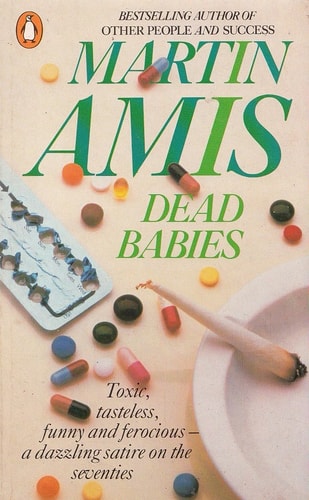
Dead Babies
0
0
As an Amazon Associate and affiliate partner, Menrva Books earns from qualifying purchases. Learn more
Author Description
If the Marquis de Sade were to crash one of P. G. Wodehouse's house parties, the chaos might resemble the nightmarishly funny goings-on in this novel by the author of London Fields. The residents of Appleseed Rectory have primed themselves both for a visit from a triad of Americans and a weekend of copious drug taking and sexual gymnastics. There's even a heifer to be slugged and a pair of doddering tenants to be ingeniously harassed. But none of these variously bright and dull young things has counted on the intrusion of "dead babies" -- dreary spasms of reality. Or on the uninvited presence of a mysterious prankster named Johnny, whose sinister idea of fun makes theirs look like a game of backgammon.
Menrva's Summary
THE PULSE
A weekend of hedonistic excess at a secluded country estate spirals into psychological torment when the inhabitants are confronted by an uninvited guest. The protagonists, a group of self-absorbed young adults, attempt to maintain their cycle of substance abuse and sexual experimentation while navigating the arrival of American visitors. Their insular world is disrupted by the presence of a mysterious figure named Johnny, whose calculated cruelty forces the characters to face the consequences of their aimless existence. The narrative utilizes a cynical, detached tone to observe the moral decay of the group as their planned festivities collapse under the weight of external manipulation.
INSIDE THE PAGES
- Satirical depiction of 1970s British counterculture
- Use of dark, abrasive humor to highlight character flaws
- Non-linear shifts in perspective among the house guests
- Exploration of nihilism and moral apathy
- Stylized, biting prose characteristic of the author
- Focus on the tension between hedonism and reality
- Inclusion of grotesque and absurd situational comedy
- Psychological breakdown of the central social circle
THE COLLECTIVE ECHO
Readers and critics frequently describe this work as a biting, cynical examination of human depravity and social vacuity. Discussion often centers on the author's ability to balance extreme, often uncomfortable humor with a bleak outlook on the characters' lack of purpose. Many highlight the stark contrast between the characters' superficial desires and the sinister reality imposed upon them by the antagonist. The pacing is noted for its deliberate descent into chaos, reflecting the internal disintegration of the group. This novel is often cited by those interested in mid-century British satire for its uncompromising and provocative narrative style.
Page Count:
224
Publication Date:
1985-01-01
Publisher:
Penguin Books
ISBN-10:
0140070028
ISBN-13:
9780140070026
Fiction
Contemporary
Satire
British literature
Contemporary
Dark Comedy