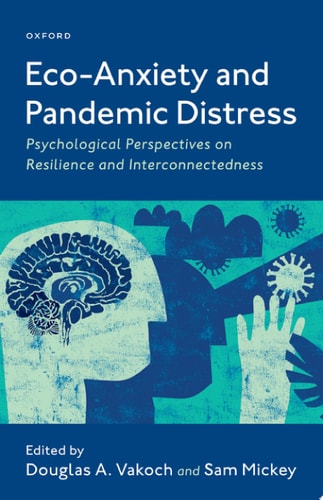
Eco-Anxiety and Pandemic Distress: Psychological Perspectives on Resilience and Interconnectedness
0
0
As an Amazon Associate and affiliate partner, Menrva Books earns from qualifying purchases. Learn more
Author Description
As environmental destruction becomes more extreme around the planet, the way humans experience the natural world is changing, giving rise to more frequent and intense experiences of eco-anxiety. Not simply personal or social, eco-anxiety is distributed across the relationships that humans have with the life, land, air, and water of Earth. This anthology presents international and interdisciplinary perspectives on eco-anxiety, with attention to two of the most prominent sources of eco-anxiety today: pandemics, specifically with regards to COVID-19, and the climate crisis. From the microscopic scale of viruses to the macroscopic scale of Earth's atmosphere, instability in natural systems is causing unprecedented forms of psychological distress, including anxiety and related emotional or affective states like grief, anger, guilt, and depression.Eco-Anxiety and Pandemic Distress both builds upon and moves beyond the latest research in environmental psychology, conservation psychology, and clinical psychology. Dominant research paradigms in these areas rely primarily on experimental and observational methodologies that analyze quantitative data. In contrast, this book focuses on sophisticated traditions of social and cultural psychology in dialogue with other disciplines in the social sciences and humanities. The result is a nuanced understanding of the human experience of confronting eco-anxiety, offering critical insights into the subjective worlds of individuals as they grapple with the intertwined existential threats of the climate crisis and pandemics.
Menrva's Summary
THE THESIS
This anthology investigates the psychological impact of environmental instability and global health crises, specifically examining how the climate crisis and pandemics like COVID-19 generate widespread eco-anxiety. Editors Douglas Vakoch and Sam Mickey curate a collection of interdisciplinary essays that move beyond traditional quantitative environmental psychology. By integrating social and cultural psychology with the humanities, the authors argue that eco-anxiety is a relational phenomenon that requires a nuanced, subjective understanding of human experience in the face of existential threats.
THE SCOPE MAP
What You Will Find
- Interdisciplinary analysis bridging environmental, clinical, and social psychology.
- Qualitative exploration of emotional states including grief, anger, guilt, and depression.
- Comparative study of microscopic viral threats and macroscopic atmospheric instability.
- Theoretical frameworks for understanding human interconnectedness with the natural world.
THE AUTHORITY PERSPECTIVE
Experts recognize this text as a significant departure from standard experimental methodologies in conservation psychology. Readers frequently note the book's success in providing a humanistic, qualitative lens to the growing field of environmental distress studies.
Page Count:
216
Publication Date:
2022-11-25
Publisher:
Oxford University Press
ISBN-10:
0197622674
ISBN-13:
9780197622674
Psychology
Non-Fiction
Mental Health
Climatic changes
Sociology
Community Tags
Similar Books