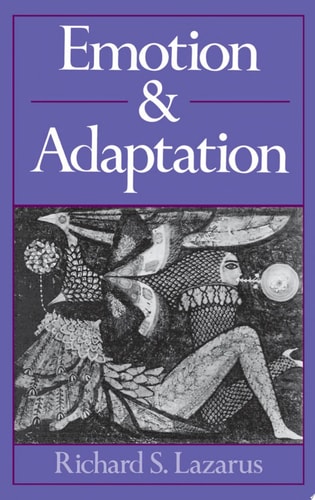
Emotion and Adaptation
0
0
As an Amazon Associate and affiliate partner, Menrva Books earns from qualifying purchases. Learn more
Author Description
In this landmark work, Richard Lazarus -- one of the world's foremost authorities -- offers a comprehensive treatment of the psychology of emotion, its role in adaptation, and the issues that must be addressed to understand it. The work provides a complete theory of emotional processes, explaining how different emotions are elicited and expressed, and how the emotional range of individuals develops over their lifetime. The author's approach puts emotion in a central role as a complex, patterned, organic reaction to both daily events and long-term efforts on the part of the individual to survive, flourish, and achieve. In his view, emotions cannot be divorced from other functions--whether biological, social, or cognitive--and express the intimate, personal meaning of what individuals experience. As coping and adapting processes, they are seen as part of the ongoing effort to monitor changes, stimuli, and stresses arising from the environment. After defining emotion and discussing issues of classification and measurement, Lazarus turns to the topics of motivation, cognition, and causality as key concepts in this theory. Next he looks at individual emotions, both negative and positive, and examines their development in terms of social influences and individual events. Finally, he considers the long-term consequences of emotion on physical health and well-being, and the treatment and prevention of emotional dysfunction. The book draws together the relevant research from a wide variety of sources, and distills the author's pioneering work in the field over the last forty years. As a comprehensive treatment of the emotions, the book will interest students, clinicians, and researchers involved in personality, social and clinical psychology, as well as cognitive and developmental psychology. It may also be used as a supplemental textbook in courses on the psychology of adjustment, emotion, and feeling.
Menrva's Summary
THE THESIS
This work investigates the fundamental role of emotion as a complex, patterned, and organic mechanism essential for human adaptation and survival. Richard S. Lazarus, a prominent figure in psychological research, synthesizes four decades of study to present a unified theory of emotional processes. He argues that emotions are inseparable from biological, social, and cognitive functions, serving as critical indicators of how individuals interpret and respond to environmental stimuli and stressors.
THE SCOPE MAP
What You Will Find
- A comprehensive theoretical framework linking cognition, motivation, and causality to emotional expression.
- Analysis of individual emotional development across the human lifespan.
- Examination of the relationship between emotional states and long-term physical health outcomes.
Scope Limits
- The text focuses primarily on psychological and cognitive mechanisms rather than purely neurobiological or pharmacological interventions.
- It does not serve as a clinical manual for psychiatric diagnosis but rather as a theoretical foundation for understanding emotional function.
THE AUTHORITY PERSPECTIVE
Experts and academics recognize this volume as a foundational text for understanding the cognitive-motivational-relational theory of emotion. Readers frequently note the academic density of the prose, which makes it a standard reference for students and researchers in clinical and personality psychology.
Page Count:
572
Publication Date:
1991-01-01
Publisher:
Oxford University Press
ISBN-10:
0190281782
ISBN-13:
9780190281786
Psychology
Developmental Psychology
Duygular
Nonfiction
Psychological Adaptation
Adaptation psychologie
Gefühl
Personality Development
Coping
Cognitie
Mental Health
Motivatie
Community Tags
Other Editions(3)

Similar Books



Reader Comments
Share Your Thoughts
No comments yet. Be the first to share your thoughts!