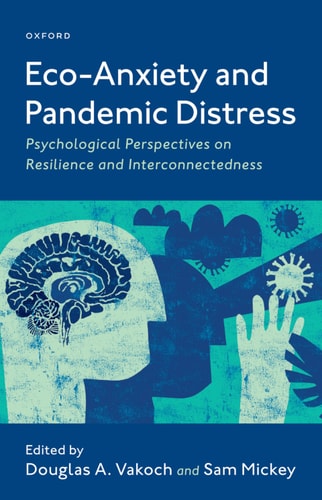
Eco-Anxiety and Pandemic Distress: Psychological Perspectives on Resilience and Interconnectedness
0
0
As an Amazon Associate and affiliate partner, Menrva Books earns from qualifying purchases. Learn more
Author Description
As environmental destruction becomes more extreme around the planet, the way humans experience the natural world is changing, giving rise to more frequent and intense experiences of eco-anxiety. Not simply personal or social, eco-anxiety is distributed across the relationships that humans have with the life, land, air, and water of Earth. This anthology presents international and interdisciplinary perspectives on eco-anxiety, with attention to two of the most prominent sources of eco-anxiety today: pandemics, specifically with regards to COVID-19, and the climate crisis. From the microscopic scale of viruses to the macroscopic scale of Earth's atmosphere, instability in natural systems is causing unprecedented forms of psychological distress, including anxiety and related emotional or affective states like grief, anger, guilt, and depression.Eco-Anxiety and Pandemic Distress both builds upon and moves beyond the latest research in environmental psychology, conservation psychology, and clinical psychology. Dominant research paradigms in these areas rely primarily on experimental and observational methodologies that analyze quantitative data. In contrast, this book focuses on sophisticated traditions of social and cultural psychology in dialogue with other disciplines in the social sciences and humanities. The result is a nuanced understanding of the human experience of confronting eco-anxiety, offering critical insights into the subjective worlds of individuals as they grapple with the intertwined existential threats of the climate crisis and pandemics.
Menrva's Summary
THE THESIS
This book investigates how the intersection of the climate crisis and global pandemics generates complex psychological distress, specifically eco-anxiety, within the human experience. Editors Sam Mickey and Douglas A. Vakoch compile interdisciplinary research that moves beyond traditional quantitative environmental psychology. By integrating social and cultural psychology with humanities-based perspectives, the authors argue that environmental instability creates profound emotional states—such as grief, anger, and depression—that require a more nuanced, qualitative analytical framework.
THE SCOPE MAP
What You Will Find
- Analysis of the psychological impacts of COVID-19 alongside climate-related environmental degradation.
- Qualitative methodologies drawn from social and cultural psychology rather than traditional experimental data.
- Interdisciplinary perspectives bridging the gap between clinical psychology, environmental science, and the humanities.
- Exploration of the subjective emotional states of individuals, including grief, guilt, and existential anxiety.
THE AUTHORITY PERSPECTIVE
Experts recognize this anthology as a significant contribution to the growing field of environmental psychology, particularly for its focus on qualitative human experience. Readers often note that the text provides a necessary expansion of the discourse surrounding climate-related mental health by incorporating diverse social science perspectives.
Page Count:
210
Publication Date:
2022-01-01
Publisher:
Oxford University Press
ISBN-10:
0197622690
ISBN-13:
9780197622698
Psychology
Public Health
Earth Sciences
Climate Change
Sociology
Community Tags
Similar Books