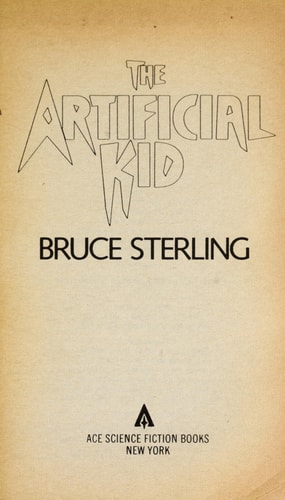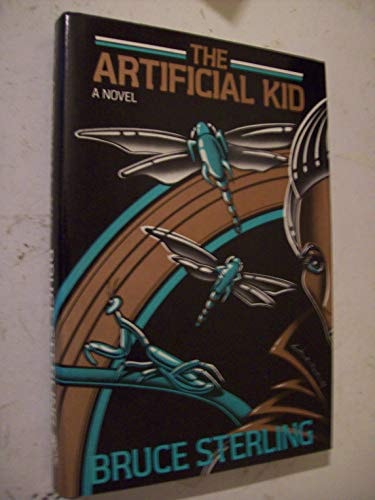
The Artificial Kid
0
0
As an Amazon Associate and affiliate partner, Menrva Books earns from qualifying purchases. Learn more
Author Description
Miles above the surface, the ultra-wealthy live in orbital homes, watching the surface citizens' home-produced videos of sex and extreme violence. The title character of The Artificial Kid, Arti, is the most popular of the Combat Artists. Arti has reached the height of his fame--equally loved by his fans and friends and despised by his competitors. However, he is not entirely who he seems to be, and when the planetary founder mysteriously returns, The Artificial Kid finds himself embroiled in a battle for power that's not ready for prime time.
Menrva's Summary
THE PULSE
The Artificial Kid, a celebrated combat artist, finds his carefully curated existence threatened when the mysterious return of the planetary founder forces him into a lethal political conspiracy. Arti navigates a world where physical violence is broadcast as entertainment for an orbital elite, maintaining his status through calculated combat performances. His objective is to preserve his autonomy and reputation while managing the scrutiny of his rivals and the public. The narrative framework utilizes a third-person perspective to explore the logical constraints of a society obsessed with spectacle and the physical reality of a planet defined by its broadcasted brutality. As the power dynamics of his world shift, he must reconcile his public persona with the hidden truths of his own origins.
INSIDE THE PAGES
- Exploration of media-saturated dystopian environments
- Examination of the commodification of violence
- Focus on the intersection of celebrity culture and political power
- Detailed depiction of high-stakes combat choreography
- Contrast between orbital elite and surface-level citizens
- Investigation of identity and artificiality
- Pacing centered on rapid shifts in social standing
- Integration of technological surveillance and broadcast systems
THE COLLECTIVE ECHO
Discussion often centers on the prescient nature of the novel regarding the rise of reality television and the digital spectacle. Readers frequently highlight the sharp, cynical tone Sterling employs to critique the voyeuristic tendencies of a society obsessed with televised conflict. Critics often point to the effectiveness of the world-building, noting how the physical environment reflects the internal decay of the characters. The balance between the fast-paced action sequences and the underlying social commentary remains a frequent topic of analysis for those interested in early cyberpunk literature. Many readers find the protagonist's struggle for authenticity in a manufactured world to be the most compelling element of the narrative.
Page Count:
256
Publication Date:
1985-01-01
Publisher:
Penguin Books Ltd
ISBN-10:
0140073353
ISBN-13:
9780140073355
Action
Dystopian
Fiction
Science Fiction
Cyberpunk
Social Commentary
Science Fiction