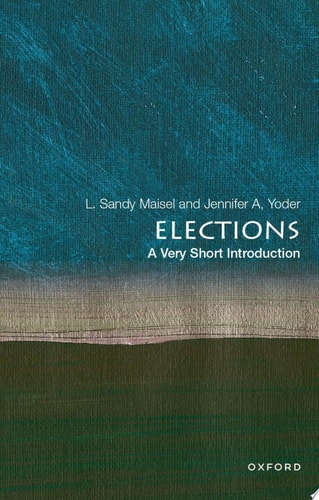
Elections: A Very Short Introduction
0
0
As an Amazon Associate and affiliate partner, Menrva Books earns from qualifying purchases. Learn more
Author Description
Most citizens know how elections work in their own country, but not all elections are created equally.Elections occur in all democracies and many non-democratic regimes as well. They determine who will hold public office and who will have the power to govern. They connect citizens to those whom they choose to make decisions on their behalf and who regulate their behavior. This book looks comparatively at the key aspects of elections. In addition to describing types of electoral systems, it discusses the implications of the various systems for the administration of elections, voter participation, representation, government stability, and other factors. Where appropriate, it examines efforts to reform a nation's (or a sub-national entity's) system, exploring the impetus for reform and the effects of those reforms when implemented.Elections: A Very Short Introduction asks readers to view election systems critically and comparatively, to understand that all democracies do not function in the same way, to think about the reasons their system functions as it does-for good or ill-and to consider alternatives with which they might not previously have been familiar. L. Sandy Maisel and Jennifer A. Yoder lay out the variety of electoral systems in the broadest terms- single-member district plurality systems; proportional systems; and mixed systems. They discuss voting and the various electoral institutions used to implement the ways in which voting occurs and how votes are tabulated across electoral systems. They analyze the consequences of each system, first for the functioning of the democracy, and second for the electoral strategies politicians employ, closing with a discussion of reforms under consideration in a number of countries.
Menrva's Summary
THE THESIS
This book investigates the fundamental question of how diverse electoral systems shape the relationship between citizens and their governing institutions. Authors Jennifer A. Yoder and L. Sandy Maisel, both established scholars in political science, utilize a comparative framework to analyze how different voting mechanisms influence political stability, representation, and voter behavior. By examining both democratic and non-democratic regimes, the text provides a structured overview of the mechanics that determine who holds power and how that power is exercised.
THE SCOPE MAP
What You Will Find
- Comparative analysis of single-member district, proportional, and mixed electoral systems.
- Examination of electoral administration, including voting procedures and vote tabulation methods.
- Discussion of the consequences of specific systems on government stability and political strategy.
- Evaluation of electoral reform efforts and their observed effects within various national contexts.
THE AUTHORITY PERSPECTIVE
Experts and educators frequently cite this work as a foundational, accessible entry point for students and general readers interested in comparative politics. The text is noted for its ability to distill complex institutional frameworks into a concise, readable format without sacrificing analytical rigor.
Page Count:
160
Publication Date:
2024-05-01
Publisher:
Oxford University Press
ISBN-10:
0197645755
ISBN-13:
9780197645758
Politics
Elections
Elections & Political Process
New Used & Rental Textbooks
Government
Democracy
Community Tags
Similar Books