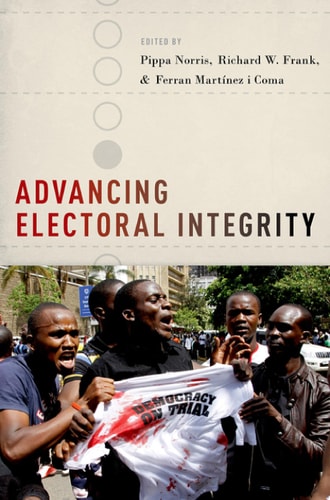
Advancing Electoral Integrity
0
0
As an Amazon Associate and affiliate partner, Menrva Books earns from qualifying purchases. Learn more
Author Description
Recent decades have seen growing concern about problems of electoral integrity. The most overt malpractices used by rulers include imprisoning dissidents, harassing adversaries, coercing voters, vote-rigging counts, and even blatant disregard for the popular vote. Serious violations of human rights, undermining electoral credibility, are widely condemned by domestic observers and the international community. Recent protests about integrity have mobilized in countries as diverse as Russia, Mexico, and Egypt. Elsewhere minor irregularities are common, exemplified by inaccurate voter registers, maladministration of polling facilities, lack of security in absentee ballots, pro-government media bias, ballot miscounts, and gerrymandering. Long-standing democracies are far from immune to these ills; past problems include the notorious hanging chads in Florida in 2000 and more recent accusations of voter fraud and voter suppression during the Obama-Romney contest.In response to these developments, there have been growing attempts to analyze flaws in electoral integrity using systematic data from cross-national time-series, forensic analysis, field experiments, case studies, and new instruments monitoring mass and elite perceptions of malpractices. This volume collects essays from international experts who evaluate the robustness, conceptual validity, and reliability of the growing body of evidence. The essays compare alternative approaches and apply these methods to evaluate the quality of elections in several areas, including in the United States, Sub-Saharan Africa, and Latin America.
Menrva's Summary
THE THESIS
This volume investigates the methodological challenges and advancements in measuring electoral integrity across diverse global political systems. The authors, including prominent scholars Pippa Norris and Ferran Martínez i Coma, synthesize a range of empirical approaches to assess how electoral malpractice is identified and quantified. By evaluating the robustness of current data collection instruments, the text provides a framework for understanding the reliability of evidence used to monitor democratic processes worldwide.
THE SCOPE MAP
What You Will Find
- Comparative analysis of electoral integrity across the United States, Sub-Saharan Africa, and Latin America.
- Methodological evaluations of cross-national time-series data and forensic analysis techniques.
- Examination of both overt electoral malpractice and subtle administrative irregularities.
- Assessment of instruments used to monitor elite and mass perceptions of election quality.
THE AUTHORITY PERSPECTIVE
Experts recognize this volume as a significant contribution to the field of comparative politics and electoral studies. Scholars frequently cite the work for its rigorous evaluation of the tools used to measure democratic health in both established and emerging democracies.
Page Count:
316
Publication Date:
2014-01-01
Publisher:
Oxford University Press
ISBN-10:
0199368724
ISBN-13:
9780199368723
Democracy
Public Policy
Sociology
Comparative Politics
Elections
Community Tags
Similar Books