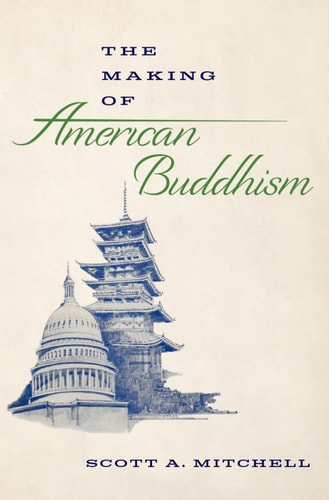
The Making of American Buddhism
0
0
As an Amazon Associate and affiliate partner, Menrva Books earns from qualifying purchases. Learn more
Author Description
As of 2010, there were approximately 3-4 million Buddhists in the United States, and that figure is expected to grow significantly. Beyond the numbers, the influence of Buddhism can be felt throughout the culture, with many more people practicing meditation, for example, than claiming Buddhist identity. A century ago, this would have been unthinkable. So how did Buddhism come to claim such a significant place in the American cultural landscape? The Making of American Buddhism offers an answer, showing how in the years on either side of World War II second-generation Japanese American Buddhists laid claim to an American identity inclusive of their religious identity. In the process they-and their allies-created a place for Buddhism in America. These sons and daughters of Japanese immigrants-known as “Nisei,” Japanese for “second-generation”-clustered around the Berkeley Bussei, a magazine published from 1939 to 1960. In the pages of the Bussei and elsewhere, these Nisei Buddhists argued that Buddhism was both what made them good Americans and what they had to contribute to America-a rational and scientific religion of peace. The Making of American Buddhism also details the behind-the-scenes labor that made Buddhist modernism possible. The Bussei was one among many projects that were embedded within Japanese American Buddhist communities and connected to national and transnational networks that shaped and allowed for the spread of modernist Buddhist ideas. In creating communities, publishing magazines, and hosting scholarly conventions and translation projects, Nisei Buddhists built the religious infrastructure that allowed the later Buddhist modernists, Beat poets, and white converts who are often credited with popularizing Buddhism to flourish. Nisei activists didn't invent American Buddhism, but they made it possible.
Menrva's Summary
THE THESIS
How did Buddhism transition from a marginalized immigrant practice to a significant, integrated component of the American cultural landscape? Scott A. Mitchell examines the pivotal role of second-generation Japanese American Buddhists, or Nisei, in the mid-twentieth century. By analyzing the publication history of the Berkeley Bussei and related community projects, Mitchell argues that these individuals constructed the religious and intellectual infrastructure necessary for Buddhism to be perceived as a rational, scientific, and distinctly American faith.
THE SCOPE MAP
What You Will Find
- Historical analysis of the Berkeley Bussei magazine from 1939 to 1960.
- Examination of the intersection between Nisei identity and religious practice during the World War II era.
- Documentation of the institutional labor, translation projects, and scholarly conventions that established Buddhist modernism.
- Contextualization of how Nisei activism preceded and enabled the later popularity of Buddhism among white converts and Beat poets.
THE AUTHORITY PERSPECTIVE
Scholars of American religious history identify this work as a critical corrective to narratives that focus exclusively on white converts. Readers frequently note the academic rigor of the research and the clarity with which Mitchell connects localized community efforts to broader national religious trends.
Page Count:
257
Publication Date:
2023-01-01
Publisher:
Oxford University Press
ISBN-10:
019764158X
ISBN-13:
9780197641583
History
Religion
English & College Success
American Studies
Sociology
English
Buddhism
Modern History
Community Tags
Similar Books