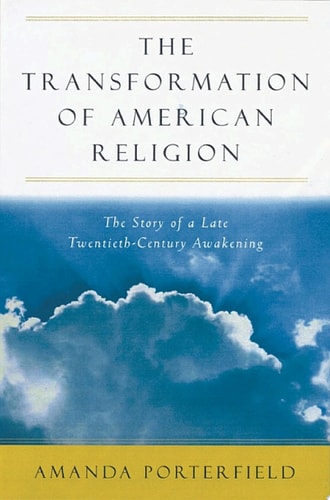
The Transformation of American Religion: The Story of a Late-Twentieth-Century Awakening
0
0
As an Amazon Associate and affiliate partner, Menrva Books earns from qualifying purchases. Learn more
Author Description
As recently as a few decades ago, most people would have described America as a predominantly Protestant nation. Today, we are home to a colorful mix of religious faiths and practices, from a resurgent Catholic Church and a rapidly growing Islam to all forms of Buddhism and many other non-Christian religions. How did this startling transformation take place? A great many factors contributed to this transformation, writes Amanda Porterfield in this engaging look at religion in contemporary America. Religious activism, disillusionment with American culture stemming from the Vietnam war, the influx of Buddhist ideas, a heightened consciousness of gender, and the vastly broadened awareness of non-Christian religions arising from the growth of religious studies programs--all have served to undermine Protestant hegemony in the United States. But the single most important factor, says Porterfield, was the very success of Protestant ways of thinking: emphasis on the individual's relationship with God, tension between spiritual life and religious institutions, egalitarian ideas about spiritual life, and belief in the practical benefits of spirituality. Distrust of religious institutions, for instance, helped fuel a religious counterculture--the tendency to define spiritual truth against the dangers or inadequacies of the surrounding culture--and Protestantism's pragmatic view of spirituality played into the tendency to see the main function of religion as therapeutic. For anyone interested in how and why the American religious landscape has been so dramatically altered in the last forty years, The Transformation of Religion in America offers a coherent and persuasive analysis.
Menrva's Summary
THE THESIS
This book investigates the mechanisms behind the rapid diversification of the American religious landscape during the late twentieth century. Amanda Porterfield, a scholar of American religious history, utilizes historical analysis and sociological observation to argue that the decline of Protestant hegemony was paradoxically accelerated by the internal success and widespread adoption of Protestant values. She posits that the emphasis on individual spiritual autonomy and the pragmatic, therapeutic application of faith fostered a culture of institutional distrust that allowed for the proliferation of non-Christian traditions and alternative spiritual practices.
THE SCOPE MAP
What You Will Find
- Analysis of the shift from a predominantly Protestant nation to a pluralistic religious society.
- Examination of the impact of the Vietnam War on cultural and religious disillusionment.
- Discussion of the influence of gender consciousness and the expansion of religious studies programs.
- Exploration of the 'religious counterculture' and the therapeutic turn in American spirituality.
Scope Limits
- The text focuses primarily on the late twentieth century and does not provide an exhaustive history of early American religious origins.
- The analysis centers on the United States and does not extend to a global comparative study of religious trends.
THE AUTHORITY PERSPECTIVE
Scholars and readers frequently cite this work as a clear, accessible entry point for understanding the sociological shifts in American faith. Experts highlight the book's ability to synthesize complex cultural factors into a coherent argument regarding the decline of traditional institutional authority.
Page Count:
260
Publication Date:
2001-01-01
Publisher:
Oxford University Press
ISBN-10:
0190284978
ISBN-13:
9780190284978
History
Religion
Cultural History
American Studies
Sociology
Community Tags
Similar Books