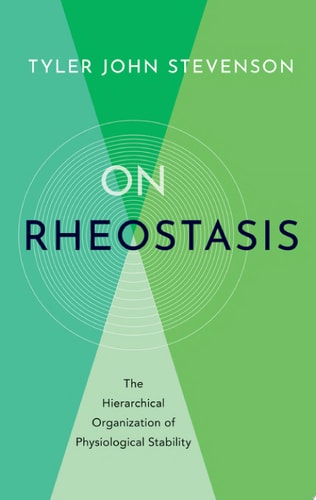
On Rheostasis: The Hierarchical Organization of Physiological Stability
0
0
As an Amazon Associate and affiliate partner, Menrva Books earns from qualifying purchases. Learn more
Author Description
All our inner organs and tissues require a constant environment to work effectively. Warm-blooded animals keep a core body temperature around 98°F as the cells function at an optimal capacity at this temperature. The core body temperature of cold-blooded animals is the same as the surrounding environment and animals need to move into warmer or colder environments so that the internal state becomes ideal for physiological processes. One of the fundamental concepts in life sciences and medical and veterinary practice is that our internal states maintain stability through a process called Homeostasis. Originally coined by Walter B Cannon, homeostasis describes a series of internal physiological components that seek to maintain a fixed state established by set points (e.g., 98°F core body temperature). Any deviations in homeostasis leads to severe pathology such as hypothermia or death. But it is becoming increasingly clear that homeostatic set points vary predictably with time or new, temporary set points can be created.The concept of rheostasis, described as the regulated change in physiology, accounts for how homeostatic set points can change to optimize our health and wellbeing, and survival in all animals. Daily changes in hormones, sleep-wake cycles, female reproductive cycles, and seasonal breeding in animals are excellent examples to show regulated changes in physiology. In this book, the concept of rheostasis is re-examined through the lens of 30 years of discoveries that include newly identified genes, increases in our understanding of the internal activity in cells, scientific advances in how neurons in the brain communicate with each other, complex imaging, and identifying how the brain creates representations of our environment.This book aims to present a new way of thinking about how our bodies maintain physiological stability and proposes that homeostasis and rheostasis act independently and evolved separately to maintain stability by entirely distinct pr
Menrva's Summary
THE THESIS
This book investigates the limitations of the traditional concept of homeostasis and proposes rheostasis as a necessary framework for understanding how physiological set points adapt over time. Author Tyler John Stevenson synthesizes three decades of scientific advancement, including genomic research, cellular activity, and neurobiology, to argue that homeostasis and rheostasis are distinct, independently evolved mechanisms for maintaining biological stability. By examining how organisms regulate internal states in response to environmental and temporal shifts, the text provides a updated model for physiological health.
THE SCOPE MAP
What You Will Find
- Analysis of the historical development of homeostasis from Walter B. Cannon to modern medicine.
- Examination of biological rhythms including sleep-wake cycles, hormonal fluctuations, and seasonal breeding.
- Integration of recent discoveries in gene identification, neural communication, and advanced imaging techniques.
- A comparative framework distinguishing between fixed-point stability and regulated physiological change.
THE AUTHORITY PERSPECTIVE
Experts recognize this work as a significant contribution to the field of integrative physiology, offering a necessary update to foundational biological concepts. Readers frequently note the academic density of the prose, which is best suited for students and professionals in the life sciences.
Page Count:
224
Publication Date:
2024-01-01
Publisher:
Oxford University Press
ISBN-10:
0197665578
ISBN-13:
9780197665572
Science
Medicine
Science
Neuroscience
Evolutionary Biology
Biology
Physiology
Community Tags
Similar Books