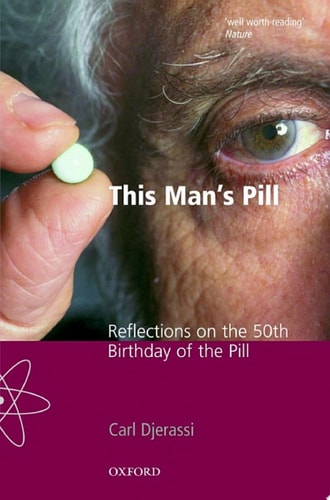
This Man's Pill: Reflections on the 50th Birthday of the Pill
0
0
As an Amazon Associate and affiliate partner, Menrva Books earns from qualifying purchases. Learn more
Author Description
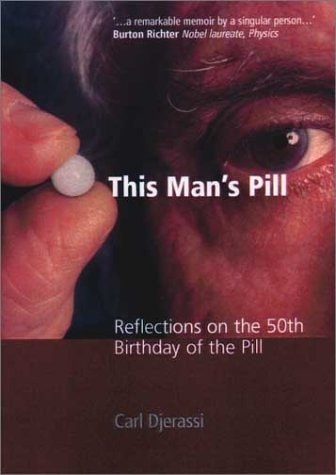
October 15, 1951 marks the birthday of one of the key episodes in 20th century social history: the first synthesis of a steroid oral contraceptive in a small laboratory in Mexico City - an event that triggered the development of the Pill. Carl Djerassi has been honoured worldwide for that accomplishment, which ultimately changed the life of women and the nature of human reproduction in ways that were not foreseeable. On the 50th anniversary of this pivotal event, Djerassi weaves a compelling personal narrative full of self-reflection and occasional humour on the impact this invention has had on the world at large and on him personally. He credits the Pill with radically altering his academic career at Stanford University to become one of the few American chemists writing novels and plays. This Man's Pill presents a forcefully revisionist account of the early history of the Pill, debunking many of the journalistic and romantic accounts of its scientific origin. Djerassi does not shrink from exploring why we have no Pill for men or why Japan only approved the Pill in 1999 (together with Viagra). Emphasizing that development of the Pill occurred during the post-War period of technological euphoria, he believes that it could not be repeated in today's climate. Would the sexual revolution of the 1960s or the impending separation of sex ("in bed") and fertilization ("under the microscope") still have happened? This Man's Pill answers such questions while providing a uniquely authoritative account of a discovery that changed the world.
Menrva's Summary
THE THESIS
This book investigates the historical, social, and scientific origins of the oral contraceptive pill while examining the broader implications of its invention on human reproduction and modern society. Carl Djerassi, a chemist instrumental in the synthesis of the first steroid oral contraceptive, utilizes his unique position as both a scientist and a writer to provide a critical retrospective. He evaluates the technological climate of the post-war era and contrasts it with contemporary regulatory and cultural environments to explain the trajectory of reproductive medicine.
THE SCOPE MAP
What You Will Find
- A historical account of the 1951 synthesis of the first oral contraceptive in Mexico City.
- Analysis of the cultural and political factors influencing the global adoption of the Pill.
- Comparative studies on reproductive health policies in different nations, including Japan.
- Reflections on the intersection of scientific discovery and the sexual revolution.
Scope Limits
- The text does not provide a comprehensive medical manual or clinical guide for contraceptive use.
- It does not offer an exhaustive biography of all contributors to the field of steroid chemistry.
THE AUTHORITY PERSPECTIVE
Experts and readers recognize this work as a significant primary source account from a key figure in 20th-century chemistry. The prose is noted for its blend of technical insight and personal reflection, providing a clear perspective on the challenges of scientific innovation.
Page Count:
322
Publication Date:
2003-01-01
Publisher:
OUP Oxford
ISBN-10:
0191037052
ISBN-13:
9780191037054
Memoir
Biography
Science
English
Science History
Medicine
Biography Autobiography
Chemists
English & College Success
Sociology