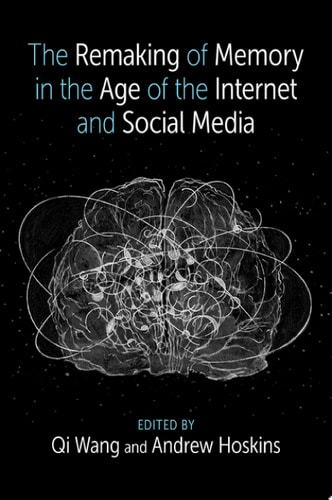
The Remaking of Memory in the Age of the Internet and Social Media
0
0
As an Amazon Associate and affiliate partner, Menrva Books earns from qualifying purchases. Learn more
Author Description
It has long been believed that individual human memory has been strengthened by the storage, representational, reproductive, and connective capacities of technologies and media. However, such views of how memory works are being challenged amidst today's digital maelstrom. In particular, the Internet, and social media platforms, have profoundly transformed the ways individuals receive, store, share, and lose information. Memory has become more externalized, dialogical, and transactive, yet at the same time, unwieldy, opaque, and inaccessible.In The Remaking of Memory in the Age of the Internet and Social Media, Qi Wang and Andrew Hoskins have assembled scholars from cognitive psychology, philosophy, neuroscience, and media and communication studies to synthesize emerging social and cognitive science research on the impact of the Internet and social media on remembering and forgetting. They probe whether human memory is being threatened by a shift from a healthy reliance to a dependency on digital media and technologies.The book illuminates theoretical and empirical research which shows the consequences of human entanglements with the Internet and social media for memory representation, expression, and socialization in individuals and the implications for the family, community, and society.Gathering the leading international scholars of Memory Studies together, this volume offers a new interdisciplinary agenda of inquiry into the digital remaking of individual, collective, and cultural memory.
Menrva's Summary
THE THESIS
This volume investigates how the integration of the Internet and social media platforms has fundamentally altered the mechanisms of human memory, shifting it from an internal cognitive process to an externalized, transactive state. Editors Qi Wang and Andrew Hoskins curate a collection of interdisciplinary research from cognitive psychology, neuroscience, and media studies to examine the tension between digital dependency and cognitive function. The text argues that while digital tools offer new capacities for storage and connectivity, they simultaneously introduce significant risks regarding the accessibility and stability of individual and collective memory.
THE SCOPE MAP
What You Will Find
- Analysis of the shift from internal biological memory to externalized digital storage.
- Empirical research on the consequences of digital entanglement for memory representation and socialization.
- Interdisciplinary perspectives from cognitive psychology, philosophy, and neuroscience.
- Examination of the broader implications for family, community, and cultural memory structures.
THE AUTHORITY PERSPECTIVE
Experts in the field of Memory Studies recognize this volume as a critical, interdisciplinary synthesis of how digital environments reshape cognitive processes. Readers frequently note the academic density of the prose, which serves as a foundational text for scholars and students examining the intersection of technology and human cognition.
Page Count:
352
Publication Date:
2024-11-08
Publisher:
Oxford University Press
ISBN-10:
0197661262
ISBN-13:
9780197661260
Psychology
Media Studies
Communication Studies
Counseling Psychology
Sociology
Technology
Community Tags
Similar Books