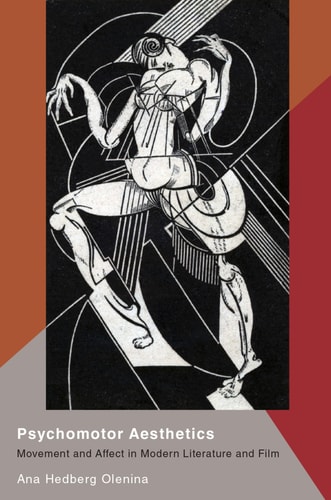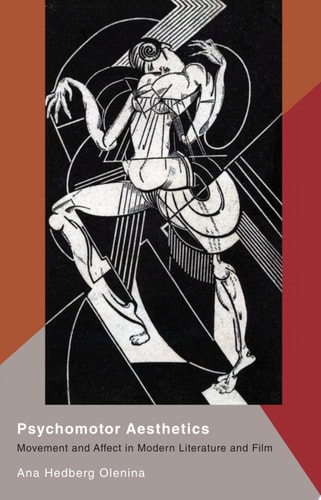
Psychomotor Aesthetics: Movement and Affect in Modern Literature and Film
0
0
As an Amazon Associate and affiliate partner, Menrva Books earns from qualifying purchases. Learn more
Author Description
In the late 19th century, modern psychology emerged as a discipline, shaking off metaphysical notions of the soul in favor of a more scientific, neurophysiological concept of the mind. Laboratories began to introduce instruments and procedures which examined bodily markers of psychological experiences, like muscle contractions and changes in vital signs. Along with these changes in the scientific realm came a newfound interest in physiological psychology within the arts - particularly with the new perception of artwork as stimuli, able to induce specific affective experiences.In Psychomotor Aesthetics, author Ana Hedberg Olenina explores the effects of physiological psychology on art at the turn of the 20th century. The book explores its influence on not only art scholars and theorists, wishing to understand the relationship between artistic experience and the internal processes of the mind, but also cultural producers more widely. Actors incorporated psychology into their film acting techniques, the Russian and American film industries started to evaluate audience members' physical reactions, and literary scholars began investigations into poets' and performers' articulation. Yet also looming over this newly emergent field were commercial advertisers and politicians, eager to use psychology to further their own mass appeal and assert control over audiences. Drawing from archival documents and a variety of cross-disciplinary sources, Psychomotor Aesthetics calls attention to the cultural resonance of theories behind emotional and cognitive experience - theories with implications for today's neuroaesthetics and neuromarketing.
Menrva's Summary
THE THESIS
How did the emergence of physiological psychology at the turn of the 20th century fundamentally reshape the production and reception of art, literature, and film? Ana Hedberg Olenina, a scholar in film and media studies, examines the historical intersection of neurophysiological research and aesthetic practice. She argues that the transition from metaphysical concepts of the mind to scientific, bodily-focused models created a new framework for understanding how art functions as a stimulus for affective and cognitive responses in audiences.
THE SCOPE MAP
What You Will Find
- Historical analysis of late 19th-century psychological laboratories and their instrumentation.
- Examination of acting techniques in early Russian and American cinema.
- Investigation into the application of psychological theories by advertisers and political entities.
- Cross-disciplinary synthesis of archival documents, literary theory, and early film studies.
Scope Limits
- The text does not provide a comprehensive history of modern psychology outside of its specific application to aesthetic production.
- The analysis focuses primarily on the turn of the 20th century and does not extend into contemporary neuroscientific developments beyond their historical roots.
THE AUTHORITY PERSPECTIVE
Experts identify this work as a rigorous contribution to the field of media archaeology and the history of aesthetics. Readers frequently note the academic density of the prose, which requires a foundational understanding of both film theory and historical psychology to fully synthesize the author's arguments.
Page Count:
412
Publication Date:
2020-05-01
Publisher:
Oxford University Press
ISBN-10:
0190051256
ISBN-13:
9780190051259
History
Psychology
Film Theory
Movies
Counseling Psychology
Psychology
Cultural History
Audiences
Physiological Aspects
Neuroaesthetics
Literary Criticism
Humanities
Media Studies
Christian Theology
New Used & Rental Textbooks
Criticism history
Medical Books
Humor & Entertainment
Community Tags
Similar Books