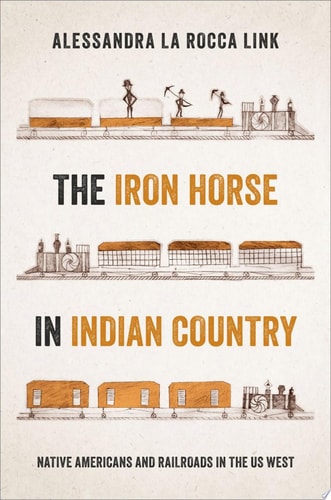
The Iron Horse in Indian Country: Native Americans and Railroads in the US West
0
0
As an Amazon Associate and affiliate partner, Menrva Books earns from qualifying purchases. Learn more
Author Description
The Iron Horse in Indian Country examines the relationships between Indigenous peoples and railroads that unfolded in the American West during the nineteenth and early twentieth centuries.Historians have long pondered the railroad's profound and far-reaching role in transforming the United States' economic, political, social, and physical landscapes. The Iron Horse in Indian Country de-centers and reframes this scholarship by spotlighting both the inner workings of railroad colonialism and the means by which Indigenous peoples incorporated railroads into their own networks. By foregrounding Indigenous entanglements with railroads, La Rocca Link challenges deep-seated stereotypes of Indians as either violently resisting the juggernaut of the Iron Horse, or simply vanishing at the first blast of a locomotive's whistle.This project begins with a study of Indigenous contributions to the Pacific Railway Surveys of the 1850s, and extends through to the rise of automobile travel and the passage of the Indian Citizenship Act in the 1920s. The Iron Horse in Indian Country demonstrates that even as railroad-driven colonialism brought calamities to Indigenous communities, Native peoples turned trains into a literal and figurative vehicle of survival, repurposing this novel technology to establish themselves as decisive actors in a modern world.
Menrva's Summary
THE THESIS
This book investigates how Indigenous peoples in the American West navigated, resisted, and repurposed the expansion of the railroad system during the nineteenth and early twentieth centuries. Alessandra La Rocca Link, a historian specializing in the American West, challenges traditional narratives that frame Native Americans as passive victims or monolithic opponents of technological progress. By analyzing primary source documents and historical records, the author argues that Indigenous communities actively engaged with railroad infrastructure to assert their sovereignty and ensure their survival within a rapidly changing modern landscape.
THE SCOPE MAP
What You Will Find
- Analysis of Indigenous contributions to the Pacific Railway Surveys of the 1850s.
- Examination of the period spanning from the mid-nineteenth century to the passage of the Indian Citizenship Act in the 1920s.
- Case studies detailing how Native nations incorporated railroad technology into their own economic and social networks.
- A critical framework for understanding railroad colonialism beyond the binary of resistance or disappearance.
THE AUTHORITY PERSPECTIVE
Scholars and historians recognize this work as a significant contribution to the field of Indigenous history, particularly for its focus on agency and technological adaptation. Readers frequently note the academic rigor of the research and the author's success in reframing the narrative of Western expansion.
Page Count:
248
Publication Date:
2025-04-17
Publisher:
Oxford University Press
ISBN-10:
0197674402
ISBN-13:
9780197674406
History
Indigenous
Educational Resources
Colonialism
Native American
Transportation History
Americas
Community Tags
Similar Books