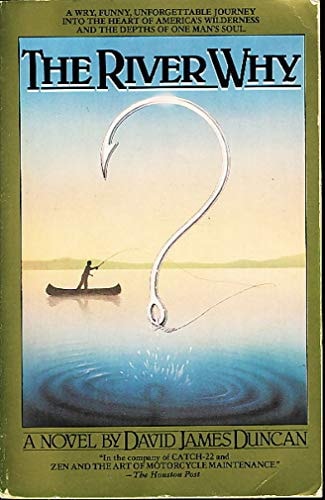
The River Why
0
0
As an Amazon Associate and affiliate partner, Menrva Books earns from qualifying purchases. Learn more
Author Description
Since its publication in 1983, The River Why has become a classic. David James Duncan's sweeping novel is a coming-of-age comedy about love, nature, and the quest for self-discovery, written in a voice as distinct and powerful as any in American letters. Gus Orviston is a young fly fisherman who leaves behind his comically schizoid family to find his own path. Taking refuge in a remote cabin, he sets out in pursuit of the Pacific Northwest's elusive steelhead. But what begins as a physical quarry becomes a spiritual one as his quest for self-knowledge batters him with unforeseeable experiences. Profoundly reflective about our connection to nature and to one another, The River Why is also a comedic rollercoaster. Like Gus, the reader emerges utterly changed, stripped bare by the journey Duncan so expertly navigates.
Menrva's Summary
THE PULSE
Gus Orviston abandons his eccentric family to pursue solitude and the elusive steelhead in the wilderness of the Pacific Northwest. Seeking independence, Gus moves into a remote cabin to dedicate his life to fly fishing. His objective of mastering the river is challenged by the complexities of human connection and the unexpected demands of self-discovery. The narrative employs a first-person perspective, blending philosophical reflection with the physical rigors of life in the wild. The world is defined by the contrast between the rigid, often absurd expectations of his upbringing and the unpredictable, fluid nature of the river environment.
INSIDE THE PAGES
- First-person narrative voice
- Detailed descriptions of fly fishing techniques
- Exploration of family dynamics and generational conflict
- Satirical portrayal of domestic life
- Philosophical inquiry into human connection to nature
- Picaresque elements in the protagonist's development
- Setting focused on the Pacific Northwest landscape
- Integration of humor with existential themes
THE COLLECTIVE ECHO
Readers frequently highlight the balance between the technical aspects of fly fishing and the deeper, existential questions posed by the protagonist. Discussion often centers on the author's distinct, rhythmic prose style which oscillates between comedic absurdity and earnest reflection. Critics often note the effectiveness of the Pacific Northwest setting as a mirror for Gus's internal development. Many readers appreciate the novel's ability to address complex themes of identity and ecology without sacrificing its lighthearted, offbeat tone. The work is widely regarded for its character-driven narrative that emphasizes the intersection of personal growth and environmental stewardship.
Page Count:
304
Publication Date:
1984-01-01
Publisher:
Bantam
ISBN-10:
0140070036
ISBN-13:
9780140070033
Humor
Nature
Contemporary
Fiction
Coming of Age
Outdoor
Literary